
Every growing small business hits a point where the tools and systems that got them started can’t keep up with where they’re headed. The contractor who managed invoices in a spreadsheet when they had ten clients now has forty and is spending entire evenings on billing. The consulting firm that processed payments through Venmo when it was just the founder, now has a team and clients asking for professional invoices with payment terms. The property manager who tracked everything in email now oversees twenty units and can’t keep the details straight.
These inflection points are easy to miss from the outside. The business looks healthy. Revenue is growing. Deposits are steady. But behind the scenes, the owner is working harder to manage their business than to grow it. Operational constraints rather than lack of capital limit small business growth more often than most financial institutions realize. A contractor might have customer demand but struggle with the administrative complexity of managing more projects.
The financial institutions that learn to spot these moments have a significant advantage. They can offer solutions at exactly the time a business is most receptive, before the owner starts shopping for tools on their own and before a fintech captures the relationship.
The Signals That Show Up in the Data
Some growth signals are obvious: a business applying for a larger credit line or opening a new location. But the most actionable signals are operational ones that show up in transaction and payment data before the business owner ever makes a formal request.
Rising invoice volume with steady or lengthening collection times is one of the clearest indicators. A business sending significantly more invoices this quarter than last is growing. If their collection times are holding steady, they’re managing the growth well. If collection times are stretching, they’re starting to struggle with the administrative burden of chasing more payments across more clients. This is a business that needs automated payment tools before the cash flow timing gap becomes a real problem.
New payment sources appearing in transaction data signal customer acquisition. When a business starts receiving payments from new names consistently, they’re adding clients. This growth trajectory often matters more for forward-looking decisions than historical revenue figures alone. Businesses adding customers need more operational capacity, not just more capital.
Increasing average invoice size alongside stable frequency suggests the business is taking on bigger projects or higher-value clients. A contractor whose average invoice moves from $3,000 to $8,000 is operating at a different scale. Their invoicing, payment collection, and customer management needs have changed even if the number of clients hasn’t.
Seasonal patterns becoming more pronounced indicate a business that’s maturing. A landscaping company with mild seasonality in year one might show sharp revenue peaks and valleys by year three. This pattern signals working capital needs, but it also signals that the business has grown past the point where informal systems can handle the complexity.
(Source: McKinsey Banking Matters)
The Signals You Hear in Conversations
Relationship managers who ask the right questions can spot outgrowth signals even without operational data. Certain phrases are reliable indicators that a business is bumping up against the limits of their current setup.
“I’m turning down work.” This is one of the most valuable things a business owner can tell you. It usually means they have demand but can’t handle the administrative load of more clients. They don’t need a loan. They need operational tools that remove the constraint.
“I spend my weekends on invoicing.” When a business owner describes spending significant personal time on administrative work that used to take an hour a week, their volume has outgrown their process. Small business owners spend an average of 14 hours weekly on administrative tasks. For growing businesses, that number can be much higher.
“I need to hire someone just to handle billing.” This signals a business at the tipping point between manual and automated operations. In many cases, the right tools can solve the problem faster and cheaper than a new hire. A business that automates invoicing, payment reminders, and customer management often avoids the need for a dedicated administrative employee entirely.
“My customers keep asking for better payment options.” When a business’s own customers are requesting professional invoices, online payment links, or AutoPay, the business is losing efficiency and potentially losing customers by not offering modern payment experiences. This is a clear signal that the current setup isn’t keeping pace with client expectations.
(Source: NFIB Small Business Economic Trends)
Why This Matters for Your Institution
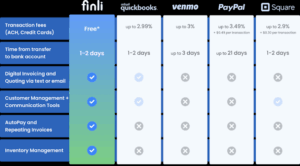
A business outgrowing its current setup is at a critical decision point. They’re going to adopt new tools. The question is whether those tools come from you or from Square, QuickBooks, Stripe, or another platform that will gradually capture their financial relationship.
59% of small businesses sought financing in the past year to meet operating expenses or pursue growth opportunities. But many of the businesses at this inflection point don’t need financing. They need operational infrastructure. And the institution that provides it earns a deeper, stickier relationship than any loan could create.
When you provide invoicing, payment collection, customer management, and cash flow tools at the moment a business outgrows manual processes, you become woven into their operations during the exact period when they’re forming new habits and building new workflows. Businesses that adopt operational tools through their financial institution during growth phases show dramatically higher engagement and retention because you entered the relationship when it mattered most.
47% of small business clients cite dedicated relationship manager support as a top criterion for choosing their primary bank. But the highest-value version of that support isn’t a quarterly review. It’s a relationship manager who can see that a business is growing, recognize the operational pressure that growth creates, and offer specific tools that solve the problem before the owner starts searching online.
(Source: McKinsey Banking Matters, Federal Reserve Small Business Credit Survey 2024)
How Finli Helps You Act on Growth Signals
Finli provides financial institutions with the operational platform that growing businesses need at exactly the moment they need it. When a relationship manager identifies a business outgrowing manual processes, Finli’s white-labeled tools offer an immediate solution: professional invoicing, payment processing with 0% ACH fees, AutoPay, automated reminders, customer management, and real-time cash flow visibility, all under your brand.
For businesses already on the platform, Finli’s data helps you spot outgrowth signals proactively. Rising invoice volume, new payment sources, lengthening collection times, and changing seasonal patterns all become visible through the platform’s real-time operational data. Relationship managers can see the growth before the business owner articulates the pain, and reach out with relevant support at exactly the right time.
Finli integrates with Q2 and Jack Henry, requires no developer resources, and launches in under 24 hours. The “Try Before You Integrate” model means you can start offering these tools to growing businesses immediately rather than waiting for a lengthy implementation cycle.
Takeaways
Every growing small business reaches a point where their current tools can’t keep up. The signs are visible in rising invoice volumes, lengthening collection times, new customer acquisition patterns, and the conversations where owners describe spending more time managing their business than growing it. Financial institutions that learn to recognize these inflection points can offer solutions at the exact moment a business is most receptive.
The alternative is watching that business find solutions elsewhere. When a growing contractor adopts Square for payments and QuickBooks for invoicing because their bank didn’t offer an alternative, the institution loses deposits, data, and relationship depth that’s difficult to recover.
Finli enables financial institutions to be the answer when businesses outgrow their current setup. By providing the operational tools growing businesses need under your brand, you capture the relationship during the period that matters most and build engagement patterns that strengthen as the business scales.