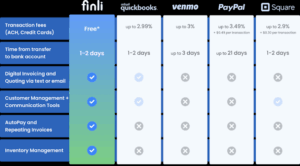

When you’re choosing a payment provider, focus on one thing: flexibility. Your business will change. Your clients will have different needs. You’ll take on new types of work. The best payment solution isn’t the one that’s perfect for today. It’s the one that adapts as your business evolves. A flexible payment platform handles recurring invoicing for monthly retainers, project invoicing for one-off work, and autopay for subscription clients. You won’t need to juggle multiple tools as your business grows and your payment needs shift.
Why One-Size-Fits-All Payment Systems Create Problems
Your retainer clients expect consistent monthly billing on specific dates. They want predictable invoices they can plan for in their budget. Your project-based clients work differently. They expect an invoice when work finishes, not on a schedule. Your subscription clients need easy automatic payments that happen without requiring action each month. Your occasional clients want straightforward payment when the work is done.
Each model has different payment needs and client expectations. When you force all of them into the same payment process, friction appears everywhere. Retainer clients get surprised by invoices that don’t match their billing cycles. Project clients receive invoices too late. Subscription clients have to manually pay each month instead of automating. Occasional clients face unclear payment options or payment terms.
The businesses that operate smoothly match their payment system to their actual business model. This is where most small business owners struggle. You’re managing payments through a mix of email invoices, manual reminders, spreadsheets, and hoping clients remember to pay. Each revenue model needs something different, but you’re forcing them all through the same broken process.
Understanding Your Business Model
Start by identifying which models you actually use. Most small businesses operate across more than one.
Retainer or recurring services involve predictable regular payments from the same client. Monthly coaching retainers, ongoing virtual assistant hours, recurring social media management, ongoing bookkeeping services, membership access, continuous consulting arrangements. The client expects invoices on the same date every month. They budget for these and want them to occur like clockwork.
Project-based work involves delivering a defined scope with a specific end point and final invoice. Custom design work, client projects, consulting engagements, event planning, renovation work, specific deliverables. The client expects one invoice when the project finishes. They don’t want multiple bills for the same project spanning months.
Subscription models involve clients subscribing to ongoing access or regular services. Membership programs, software subscriptions with annual billing, ongoing service memberships, recurring access to your expertise or service. The client expects automatic recurring billing on a predictable schedule. They want to set it once and have payments happen automatically.
Variable revenue involves clients requesting work on different schedules with different project sizes. Freelancers taking on various projects, consultants fielding different types of requests, service providers with clients booking appointments sporadically, agencies handling projects of varying scope. The client expects an invoice when the work is complete, and the amount varies based on the scope.
Most small businesses operate across two or three of these models. A freelance designer might have monthly retainer clients plus occasional one-off projects. A consulting firm might have monthly retainer clients plus project work. A service business might have monthly memberships plus one-time service requests. Understanding which models you serve helps you build a payment strategy that actually works across all of them.
Building Payment Strategy for Retainer and Recurring Revenue
Recurring revenue is your most predictable revenue stream. These clients expect consistent invoicing on specific dates. They budget around these payments and plan for them.
Recurring revenue should happen automatically. Set up recurring invoices that go out on the same date every month. Your client receives a professional invoice at a predictable time. They know exactly what to expect and when. This consistency builds trust and reduces payment friction. They’re expecting the invoice and ready to pay.
The real game-changer is offering recurring billing where payments process automatically each month. When clients can authorize recurring payments once and have them process automatically, everyone wins. Your cash flow becomes predictable. The client doesn’t have to take action each month. Payment happens reliably without requiring follow-up from either side.
For recurring clients, ACH payments are your best option. Recurring ACH transfers are more reliable than credit cards. They’re also less expensive, often with no fees at all. When you’re processing the same payment repeatedly, keeping costs low matters. This is exactly the scenario Finli’s 0% ACH fees address. You keep more of what you collect each month from your most reliable revenue stream.
Building Payment Strategy for Project-Based Work
Project clients have different expectations. They want one clear invoice when work completes. They want transparency about scope and deliverables. They expect straightforward payment terms for that final invoice.
Invoice immediately when the project finishes. Delaying invoicing is one of the biggest reasons project-based businesses get paid slowly. The sooner you invoice, the sooner they can process payment. This timing difference alone often means getting paid a week or two earlier.
Make payment options clear and easy. Project clients often have approval processes before they can pay. They might need to submit your invoice to accounting, get manager approval, or process it through their accounts payable system. Offering multiple payment methods removes obstacles. Let them pay however their internal process requires.
For larger projects, consider milestone-based invoicing instead of waiting until the very end. Instead of invoicing $15,000 at project completion, invoice $5,000 after phase one, $5,000 after phase two, and $5,000 at final delivery. This reduces payment risk and improves your cash flow during longer projects.
Building Payment Strategy for Subscription Models
Subscription clients fundamentally want automatic recurring billing. They subscribe to get recurring access to your service or expertise. Manual invoicing defeats the purpose. The client shouldn’t have to do anything each month.
Set up true subscription billing that automatically charges on a fixed schedule. The client signs up once, and payments process automatically each month or whatever frequency your subscription uses. This is different from recurring invoices. It’s built into your system and removes friction entirely.
Subscription clients generate 3 to 5 times more revenue over their lifetime compared to one-time project clients. This means the effort you invest in making subscription billing smooth pays significant dividends. These clients are worth keeping, and a subscription payment process that just works contributes directly to retention.
Building Payment Strategy for Variable Revenue
Variable revenue businesses need payment options that work for on-demand service requests. The client requests work when they need it, and the project size varies each time.
Make payment straightforward when the work is complete. Project invoicing should be clear and professional, with transparent payment terms. When clients know exactly what they’re paying for and when payment is due, friction drops significantly.
Finli’s flexible invoicing options work well for variable revenue. You can invoice immediately when work finishes, offer multiple payment methods, and send automated reminders if payment doesn’t arrive on schedule. One-click payment options from invoices make it easy for clients to settle up quickly.
B2B vs B2C Considerations
Most service-based businesses work primarily B2B, though some serve individual clients.
B2B clients expect net-30 or net-60 invoicing terms. They want professional invoices with detailed descriptions. They often have approval processes and accounts payable departments that need time to process payment. They value payment flexibility and might prefer ACH or bank transfer to avoid credit card fees on their side.
Individual clients typically expect faster payment options. They might prefer to pay immediately upon invoice receipt, and they want clear simple terms. They need receipts, not detailed accounting invoices.
If you serve both audiences, your payment strategy needs to accommodate both approaches. Offer invoice-based payment for B2B clients who expect terms and itemization. Offer immediate payment options for individual clients who expect to pay quickly.
How Finli Supports Multiple Business Models at Once
Different business models require different payment approaches, which is why many small business owners end up with multiple disconnected tools. One system for recurring billing, another for one-off invoicing, a third for payment processing. This fragmentation creates inconsistency and complexity. It’s also exactly where Finli solves the real problem.
Finli handles all of these models through a single platform. You can set up recurring invoices for retainer clients that go out automatically on your schedule. You can create professional project invoices with flexible payment options. You can set up recurring billing for subscription clients with automatic monthly charges. You can generate payment links for clients who want to pay on demand.
For retainer and recurring revenue, Finli’s automated recurring invoices eliminate manual work while ensuring consistency. Your client receives the same professional invoice on the same date every month. Automated payment reminders work in the background. When you offer Finli’s 0% ACH fees, recurring clients pay with their preferred method without processing costs eating into your margin.
For project-based work, Finli’s flexible invoicing lets you send professional invoices immediately when work finishes. Clients see multiple payment options and can pay however their process requires. Real-time tracking shows you when they view the invoice and when payment processes.
For subscription billing, Finli’s recurring billing system automates the entire process. Set up the subscription once, and monthly payments process automatically. Your clients never have to manually pay. Your cash flow becomes predictable because you know exactly when payments arrive.
For variable revenue, Finli’s payment links and flexible invoicing mean clients can pay quickly when work completes. Multiple payment methods ensure they can pay however is easiest for them.
Across all these models, Finli’s built-in CRM and payment tracking give you visibility into which clients use which payment methods, how quickly each model pays, and whether your payment strategy is actually optimized.
Designing Your Payment Strategy
Start by mapping your actual revenue. What percentage comes from retainer clients? Projects? Subscriptions? Sporadic requests? This breakdown shows you where to focus your optimization.
For your largest revenue sources, customize your approach. If 60% of your revenue comes from retainer clients, build your payment process around recurring billing. If 50% comes from projects, optimize for quick invoicing and flexible payment options.
Then evaluate whether your current system actually supports each model. Can you set up recurring billing for retainer clients? Can you invoice immediately and send payment reminders for project work? Can you offer easy payment options for occasional clients? If the answer is no to any of these, your payment system is creating friction.
Takeaways
Your business model determines which payment strategy actually works. Retainer clients need consistent recurring billing. Project clients need quick invoicing with flexible options. Subscription clients need automatic recurring charges. Occasional clients need straightforward invoice payment.
When your payment strategy aligns with your business model, everything works better. Clients experience a process that matches their expectations. You get paid faster. Cash flow becomes predictable.
This week, identify which business models generate your revenue. For your largest segments, evaluate whether your current approach optimizes for those models or creates friction. Then implement changes that align your payment strategy with how you actually operate.
Get started at finli.com or reach out to support@finli.com if you have questions.