Your customer loved the work. They approved the final deliverable. They promised payment would arrive “by end of week.” It’s now three weeks later, and you’re still waiting.
This isn’t a one-time frustration. The pattern repeats across your customer base. Some invoices arrive on time, but most stretch past the due date. A few disappear into limbo until you finally chase them down. The unpaid balance grows, your cash flow tightens, and you’re left wondering why getting paid has become this complicated.
Here’s what most business owners assume: customers are disorganized, cash-strapped, or deliberately avoiding payment. So they implement stricter terms, send more aggressive reminders, or require deposits upfront. But these reactions rarely solve the actual problem because they’re treating the symptom, not the cause.
The real reason your customers pay late almost never has to do with willingness. It has to do with friction, clarity, and whether you’ve made paying you as easy as it needs to be.
Payment Friction Is Your Biggest Problem
Most late payments happen because paying you is harder than it should be. Your customer fully intends to pay. They genuinely want to settle the invoice. But between receiving it and actually processing payment, friction accumulates until the invoice gets set aside and forgotten.
Think about what your current process asks customers to do. Maybe they need to log into their bank account and manually enter your payment information. Maybe they have to write a check, find an envelope, locate a stamp, and mail it. Maybe they have to navigate to a separate payment portal, create an account, verify their identity, and then finally submit payment. Each step is a friction point where the invoice gets set aside “for later.”
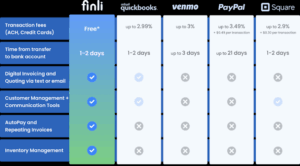
Finli eliminates this friction by embedding payment options directly in your invoices. When a customer receives your invoice, they see a “Pay Now” button. One tap, and payment is complete. No separate portals, no account creation, no manual data entry. Research shows invoices with embedded payment options get paid up to four times faster than those requiring manual processing. That’s not because customers suddenly become more reliable. It’s because you’ve removed the obstacles between their intention to pay and the actual payment.
Compare this to your current experience. How many customers do you chase because they received the invoice but never acted on it? How many say “I lost the invoice” or “I didn’t know how to pay”? These aren’t malicious delays. They’re friction failures in your payment process.
Unclear Expectations Create Confusion
Sometimes late payments stem from simple misunderstanding. Your customer thinks the invoice is due in 45 days. You think it’s due in 30. They believe net-30 means 30 days from when they receive it, not from when you sent it. They’re confused about what services are included in the amount billed.
These gaps accumulate silently. Your customer isn’t deliberately ignoring the invoice. They genuinely don’t realize they should have already paid it. They’re waiting for clarification that never comes, or they’re operating under different assumptions about timing and scope.
Professional invoicing prevents this by being crystal clear about what’s owed, when it’s due, and what was actually delivered. Finli’s invoice templates include itemized services, explicit payment terms, and clear due dates. When customers know exactly what they’re paying for and when it’s due—and these expectations match what was discussed beforehand—payment confusion drops dramatically. Every invoice you send carries the same professional formatting and clear structure, so your customers receive consistent messaging.
Their Cash Flow Problems Are Real
Sometimes your customer really does want to pay on time but genuinely cannot. They’re waiting on a customer payment before they can pay you. They hit an unexpected expense that tightened their cash position. They’re managing seasonal revenue cycles and you happen to invoice during a slow month.
This isn’t something you can fix by sending more aggressive reminders. But you can manage it proactively. When you have real-time visibility into customer payment patterns—which Finli provides through its built-in CRM and payment tracking—you can distinguish between “this customer always pays late” and “this customer is experiencing a temporary cash crunch.” One requires a different approach than the other. You can offer early payment discounts to incentivize immediate payment, agree to a payment plan if the amount is substantial, or adjust terms for future work based on their cash flow patterns.
Common Invoicing Patterns That Slow Payment
When invoices don’t go out right away, payment timelines get compressed before they even start. A customer completes work Monday, but the invoice doesn’t arrive until the following Wednesday. Their clock starts ticking from that point, not from when work finished. Multiple customers receiving inconsistent invoice formats creates questions about what they’re actually paying for. Automated reminders that don’t follow a predictable schedule mean some invoices get follow-up and others don’t, depending on whether you remember.
None of this means you’re doing anything wrong. It just means your current process might not scale with your growing business. As you take on more customers and more invoices, manual processes create gaps that faster, automated systems prevent.
Finli handles this by automating the entire flow. Invoices go out immediately and consistently formatted with all required information. Automated reminders follow predictable schedules—before the due date, on the due date, and at intervals afterward. Your customers receive consistent, professional communication that keeps payment top-of-mind. The system works whether you’re managing five customers or fifty.
What Late Payments Actually Cost You
Beyond the frustration, late payments carry real financial consequences. While waiting for payment, you’re covering your own expenses: payroll, rent, software subscriptions, vendor payments. Your money gets stuck in receivables instead of supporting your operations.
If your average invoice takes 45 days to collect instead of 30, you’re carrying extra working capital that could otherwise be invested elsewhere. For a business with $50,000 in average outstanding invoices, that 15-day difference might require a line of credit costing $1,500 annually in interest. You’re paying for the privilege of waiting for your own money.
Late payments also trigger cascading costs. You miss early payment discounts with your vendors. You incur late fees if you can’t pay your own obligations on time. You spend administrative time chasing payment instead of growing your business. For small business owners already stretched thin, these costs compress margins without providing any value.
Getting paid faster directly protects your bottom line. With Finli’s one-click payments and automated reminders, the average time to payment drops significantly—often by two to three weeks. That’s real cash staying in your business instead of tied up in receivables.
How to Fix the Root Causes
Start by eliminating payment friction. Offer multiple payment methods—credit cards, ACH transfers, digital wallets—and enable one-click payment directly from invoices. Finli provides all of this, including 0% ACH fees so you’re not absorbing processing costs on cheaper payment methods. When your customer can pay in seconds instead of spending 20 minutes on manual processing, payment happens immediately instead of getting set aside.
Second, make your invoicing crystal clear. Include itemized services, explicit payment terms, and exact due dates. Leave no room for misunderstanding about what’s owed or when. Professional formatting signals that this is important and deserves immediate attention. Finli’s templates ensure this consistency automatically across every invoice you send.
Third, implement automated reminders that work on your schedule. A friendly heads-up a week before the due date, a notification on the due date itself, and professional follow-ups if payment becomes overdue. Finli sends these automatically via email and SMS without requiring any manual effort from you. These reminders keep your invoice top-of-mind without the awkwardness of personal follow-up.
Fourth, track customer payment patterns so you understand who’s reliable and who needs different arrangements. Finli’s built-in CRM shows you each customer’s complete payment history, patterns, and preferences. Some customers can handle monthly autopay. Others need flexible terms. When you have this visibility, you can adjust your approach instead of applying the same process to every customer.
Takeaways
Late payments rarely result from customer negligence or bad intent. They stem from friction in your payment process, unclear expectations, or legitimate cash flow constraints on their end. Understanding the root cause helps you implement solutions that actually work.
This week, audit your current invoicing process. How long does it take from completing work to sending an invoice? How many steps does it take for customers to pay you? How many reminders does the average customer need before paying? These metrics reveal where your friction lives.
Then implement changes that eliminate friction. Make payment a one-click action. Make your invoices crystal clear. Automate your reminders. Track customer payment patterns so you can distinguish between customers who consistently lag and those facing temporary constraints.
The businesses that maintain healthy cash flow aren’t the ones sending aggressive collection emails. They’re the ones who’ve made paying so easy and clear that late payments become the exception instead of the norm.
Get started at finli.com or reach out to support@finli.com if you have questions.