
When a small business opens an account at your institution, your team does everything right by the book. They verify documentation, activate the debit card, set up online banking, walk through account features, and schedule a follow-up for 90 days. The business owner leaves with a functioning checking account and a positive impression. Two weeks later, they need to send their first invoice. They google it, find FreshBooks, and sign up. A week after that, a client asks to pay by card. They download Square. Within a month, their entire daily workflow runs through tools they found on their own.
Nothing in your onboarding process went wrong. But the window to become part of the business owner’s daily operations is narrow, and it opens the moment they walk out the door. The account setup was thorough. The opportunity is in what comes next. 68% of small business relationships show declining engagement within the first 18 months. That decline doesn’t start at month 12. It starts in the first few weeks, when the business builds its operational habits around platforms that aren’t yours. Keeping them means being part of those habits from the start.
(Source: Banking Administration Institute Customer Retention Study)
What Happens in the Weeks After Onboarding
The first 30 days after a business opens an account are when the most consequential decisions get made, and almost none of them involve the bank. The business owner is setting up the systems that will run their daily operations: how they’ll invoice clients, how they’ll collect payments, how they’ll track who owes them money, how they’ll monitor cash flow.
These decisions happen fast. A contractor needs to send an invoice the same week they open their account. A property manager needs to collect rent before the first of the month. A consulting firm needs to process a retainer payment from their first client. In each case, the business owner solves the problem immediately with whatever tool they find first.
84% of small businesses in the U.S. now use at least one fintech service, primarily for payment processing. Most of these adoption decisions happen in the earliest days of the business, during exactly the window when your institution just finished onboarding them. The onboarding process got the account set up. The business owner’s operational needs sent them directly to your competitors.
(Source: CoinLaw Research on SME Fintech Usage)
The Moments That Determine Where They Build
It’s not one decision. It’s a series of small moments in the first few weeks where the business owner needs something operational, and whoever provides it first wins that part of the relationship.
The first invoice. When a business owner needs to send a professional invoice and your onboarding covered checking account features but not invoicing tools, they find their own solution. That invoicing platform becomes a daily habit within weeks.
The first late payment. When a client doesn’t pay on time and the business owner spends an evening writing follow-up emails, they start looking for automated reminder tools. If your institution offered payment reminders during onboarding, this moment would have been handled. Instead, it sends the business owner to another platform.
The first time they need to check cash flow. The business owner logs into your online banking and sees a balance. What they need is a picture of what’s outstanding, what’s coming in, and whether they can cover next week’s expenses. Your platform shows a number. QuickBooks shows a forecast. The business owner starts spending more time in QuickBooks than in your online banking.
The first payment processing decision. A client asks to pay by card, or the business owner wants to offer digital payment options. If your onboarding didn’t introduce payment processing, the business owner finds Square or Stripe and starts routing revenue through a platform that isn’t yours. That revenue now sits in someone else’s ecosystem for days before trickling into your account.
Each of these moments is small on its own. Together, they represent the complete operational foundation of the business. The institution that’s present for these moments keeps the relationship. The one that isn’t is left holding an account while the real activity happens elsewhere.
How to Be Part of the First Month
The fix isn’t a longer onboarding process. It’s a different one. Instead of focusing exclusively on the account, the conversation expands to include the operational tools the business will need in its first week.
When a new business customer opens an account, introduce invoicing, payment collection, and customer management tools alongside the checking account. Set up their first invoice template. Show them how digital payment links work. Walk them through automated reminders. The goal is to ensure that when they need to send their first invoice, the tool is already set up and ready to use on your platform.
This changes the entire trajectory of the relationship. Businesses that adopt operational tools during onboarding form habits that create lasting engagement. Instead of the checking account sitting idle while daily activity happens elsewhere, your platform becomes the place where business happens every day. Small businesses that maintain strong engagement through year two show 73% higher lifetime value and 89% lower churn rates.
(Source: Banking Administration Institute Customer Retention Study)
The onboarding conversation also changes in tone. Instead of walking through account terms and fee schedules, the relationship manager asks: “How are you planning to invoice your clients? How will your customers pay you? How much time do you currently spend on payment follow-up?” These questions surface the exact needs that your platform solves, and they position your institution as a partner interested in the business, not just the account.
Train relationship managers to think about the first month, not just the first day. The business owner isn’t going to switch checking accounts to another bank. But they are going to adopt invoicing, payment, and customer management tools within weeks. The onboarding conversation is your best chance to make sure those tools are yours.
How Finli Transforms Onboarding
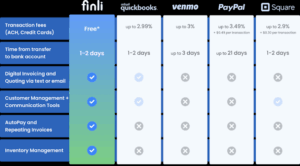
Finli provides financial institutions with the operational platform that makes onboarding about the business, not just the account. When a new customer opens a checking account, they can be set up with integrated invoicing, payment processing with 0% ACH fees, AutoPay, automated reminders, customer management, and real-time cash flow visibility from day one, all under your brand.
This means the first invoice goes out through your platform. The first payment comes in through your system. The first customer record gets created in your CRM. Every operational habit the business forms in its first month is connected to your institution rather than to an external platform.
Finli launches in under 24 hours with no developer resources required. The “Try Before You Integrate” approach lets you start offering operational tools to new business customers immediately, with prebuilt Q2 and Jack Henry integrations available as adoption grows.
Takeaways
Keeping new small business customers means being part of their operations from the first week, not just their account from the first day. The gap between what the account setup covers and what the business actually needs in its first month is where fintech platforms capture the daily relationship. By the time you schedule the 90-day follow-up, the business has already built its workflow around tools that belong to someone else.
The institutions that retain the deepest small business relationships are the ones that treat onboarding as the moment to establish operational tools, not just account access. When the first invoice, the first payment, and the first customer record all happen on your platform, you’ve built the foundation for a relationship that grows stronger with every transaction.
Finli enables financial institutions to make onboarding the starting point of an operational relationship, not just an account relationship. The first few weeks determine where your customers build. Make sure they build with you.