
Tax season just passed, and if you found yourself scrambling to remember expenses or wondering what you missed, you are not alone. Most small business owners leave money on the table every year, not because they are careless, but because nobody told them what actually counts as a deduction. The best time to fix that is right now, while the year is still fresh.
The IRS allows business owners to deduct expenses that are “ordinary and necessary” to run their business. That phrase covers more ground than most people realize. Here are the deductions worth knowing about, and the documentation habits that make claiming them straightforward.
Home Office
If you work from home, you may qualify for a deduction even if you do not have a dedicated room. The space must be used regularly and exclusively for business purposes. You have two options: the simplified method, which is $5 per square foot up to 300 square feet for a maximum $1,500 deduction, or the actual expense method, where you calculate the percentage of your home used for business and apply that percentage to your rent or mortgage interest, utilities, insurance, and repairs. The actual method requires more recordkeeping but can produce a significantly larger deduction. A 200-square-foot office in a $2,000-per-month rental, for example, works out to roughly $4,800 per year using the actual method versus $1,000 with the simplified approach.
Mileage and Vehicle Expenses
Every mile you drive to a client meeting, supply run, or job site qualifies. The IRS standard mileage rate for 2025 is $0.70 per mile.
(Source: IRS Publication 334)
A freelance contractor who drives 8,000 business miles in a year can deduct $5,600. The requirement is a mileage log that records the date, destination, and business purpose for each trip. Apps like MileIQ or a simple note in your phone work fine.
Software, Subscriptions, and Digital Tools
This is one of the most consistently overlooked categories. Any software you use to run your business is deductible: accounting tools, project management platforms, cloud storage, your email marketing service, your invoicing and payment system, and anything else tied to how your business operates. Many small business owners pay these bills every month without ever counting them as a deduction. Add them up, and the total is often in the hundreds annually.
Business Meals
The rules around meals have shifted in a way worth knowing about. For 2025 and 2026, business meals shared with clients, customers, or partners are 100% deductible, up from the standard 50% in most other years.
(Source: IRS Publication 334)
The meal needs a clear business purpose, and you should document who attended and what was discussed. A quick note in your calendar or a photo of the receipt with context attached is sufficient.
Phone and Internet
If you use your personal phone or home internet for business, the business-use portion is deductible. If your phone is roughly 65% business use, deduct 65% of the monthly bill. Keep the estimate defensible. Claiming 100% on a phone you clearly use personally is the kind of inconsistency that invites questions.
Professional Development and Education
Courses, certifications, trade publications, industry conferences, workshops, and books that maintain or improve skills in your current business are fully deductible. This does not cover education that qualifies you for an entirely new career, but anything that sharpens what you already do counts.
Health Insurance Premiums
Self-employed owners who pay for their own health insurance can deduct 100% of premiums for themselves, a spouse, and dependents. This includes dental and vision coverage. The deduction reduces your adjusted gross income directly, which makes it more valuable than many standard itemized deductions.
Payment Processing Fees and Bank Charges
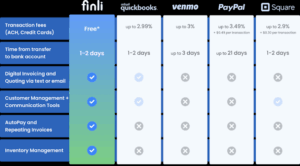
Every fee your payment processor charges is a deductible business expense. The same applies to bank account fees, wire transfer charges, and monthly service costs. Most small business owners never add these up because they get deducted automatically, but processing fees on $75,000 in card payments at 2.9% amounts to $2,175 in deductible expenses. That is real money, and it is already paid.
Retirement Contributions
Contributions to a SEP-IRA, SIMPLE IRA, or solo 401(k) are deductible and can significantly lower your taxable income. A SEP-IRA allows you to contribute up to 25% of net self-employment income. Many small business owners skip this entirely either because they think they cannot afford it or because setting up the account feels like something to do later. Even a modest contribution before December 31 moves real money out of your taxable income.
The Qualified Business Income Deduction
If you are a sole proprietor, LLC owner, or S-Corp owner, you may be eligible to deduct up to 20% of your qualified business income under Section 199A. The One Big Beautiful Bill Act signed in 2025 made this deduction permanent and expanded eligibility for 2026. It is one of the largest deductions available to small business owners and one of the most frequently missed because the eligibility rules are complex. A tax professional can tell you quickly whether you qualify.
Why Documentation Is Half the Battle
A deduction is only valuable if you can prove it. If you are audited, you need receipts, invoices, and records that show what was purchased and why. Bank statements alone are typically not enough.
The good news is that solid documentation does not require overhauling how you work. It requires consistent habits throughout the year. Save digital copies of receipts the day you receive them. Keep a mileage log in your phone. Use a file naming convention that makes finding records easy. Keep business and personal finances completely separate so you are not untangling mixed transactions every January.
Business owners who sail through tax season are not doing anything complicated. They maintain clean records year-round instead of reconstructing everything after the fact.
How Organized Payment Records Make This Easier
Payment processing fees and platform subscriptions are deductible, but only if you can account for them. When your invoicing and payment data is scattered across spreadsheets, email threads, and multiple bank statements, those amounts get missed.
Finli keeps every transaction organized in one place. Every payment collected, every fee charged, and every customer interaction is recorded automatically. When you are reviewing expenses with a tax professional or preparing documentation, the data is already there and accessible. No pulling records from five different places or trying to remember which platform charged what and when.
Start Now
Set up a folder for receipts this week. Start logging mileage today. Make sure your invoicing platform keeps clear records of every transaction and fee. If you are not already working with a tax professional, finding one before year-end gives them time to identify deductions specific to your industry and business structure. That cost, by the way, is fully deductible too.