
You bill some clients the same amount every month. You bill others a different amount for every project. If you’re sending both types of invoices manually, one at a time, you’re doing more work than you need to.
The question isn’t whether recurring billing is better than one-off invoicing. It’s which one fits each client relationship, and whether your invoicing system lets you use both without extra effort. Getting this wrong in either direction costs you time or costs you flexibility.
What One-Off Invoicing Is Built For
One-off invoicing works when the amount, scope, or timing changes from job to job. A contractor billing for a renovation project, a consultant billing based on hours worked that month, a designer billing per project. These relationships don’t have a fixed number that repeats, so a new invoice for each piece of work makes sense.
The strength of one-off invoicing is precision. Every invoice reflects exactly what was delivered that period. There’s no risk of overbilling or underbilling because the invoice is built fresh each time based on actual work.
The weakness is effort. Every invoice requires you to create it, review it, send it, and track whether it’s been paid. For a handful of clients, this is manageable. For dozens of clients billed regularly, it adds up to real hours every month.
What Recurring Billing Is Built For
Recurring billing works when the amount and timing are predictable. A membership fee, a monthly retainer, a subscription service, tuition, rent. Same amount, same schedule, every time.
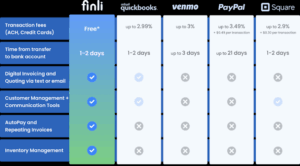
With recurring billing and autopay, you set it up once and the system handles the rest. The invoice generates automatically. The payment processes automatically. You’re not manually creating and sending the same invoice every month, and you’re not manually checking whether it was paid.
The time savings compound. If you have 20 clients on a fixed monthly fee, that’s potentially 20 invoices you’d otherwise create and track by hand every single month. Automating that isn’t a minor convenience. It’s hours back every month, indefinitely.
Why Businesses Default to One-Off Even When Recurring Would Work
Many small business owners use one-off invoicing for everything, even clients who would be perfect candidates for recurring billing. Often this is because their invoicing tool doesn’t make recurring billing easy to set up, so manual invoicing becomes the default for every client regardless of whether the relationship is predictable.
Other times it’s habit. If you started your business creating invoices manually, that becomes the process, and it doesn’t get revisited even as your client base grows and includes more predictable, repeat relationships that could be automated.
The cost of defaulting to one-off invoicing when recurring would work is invisible until you add it up. A few extra minutes per invoice doesn’t feel significant in the moment. Multiplied across months and clients, it’s a meaningful chunk of administrative time that could go toward client work instead.
How to Decide Which Fits Each Client
Look at your client list and ask two questions for each one: does the amount change, and does the timing change? If the answer to both is no, that client is a strong candidate for recurring billing and autopay. Set it up once, and it runs without you.
If either the amount or the timing varies, one-off invoicing still makes more sense. Trying to force variable work into a recurring structure creates more problems than it solves, either through constant plan adjustments or invoices that don’t accurately reflect what was delivered.
Some businesses land in the middle. A base retainer billed monthly, plus additional project work billed separately as it comes up. This hybrid approach works well when your invoicing platform supports both recurring and one-off billing for the same client without requiring two separate systems.
The Real Advantage of Having Both Options
The businesses that save the most time aren’t the ones that pick one approach and force every client into it. They’re the ones matching the billing method to the relationship, client by client, using recurring billing where it fits and one-off invoicing where flexibility is required.
This only works smoothly if your platform supports both without extra complexity. Switching between two separate tools, one for subscriptions and one for project invoicing, reintroduces the exact inefficiency you’re trying to eliminate. A single platform that handles recurring invoices, autopay, and one-off invoicing side by side means you’re never forcing a client relationship into the wrong billing model just because it’s easier for your software.
Takeaways
Recurring billing and one-off invoicing aren’t competing approaches. They’re tools for different situations, and most businesses need both depending on their client mix.
Go through your client list and identify who’s being billed the same amount on the same schedule every time. Those clients are candidates for recurring billing and autopay, freeing up the manual invoicing time you’re currently spending on relationships that don’t actually need it.
This week, pick your three most predictable, repeat clients and move them to recurring billing if you haven’t already. It’s a small change that pays off every single month going forward.
Get started at finli.com or reach out to support@finli.com if you have questions.