
You’ve heard about specialized software built specifically for your industry. Construction companies use Buildium or similar tools built for their workflows. Service industries use specialized invoicing and payment systems. The pitch is always the same: we understand your industry specifically, so we built software designed exactly for how you work.
There’s logic to this approach. Industry-specific software includes workflows, templates, and features tailored to specific business models. A construction platform handles job costing differently than a consulting platform. A service business invoicing tool includes features a retail business doesn’t need.
But specialization comes with trade-offs. These tools are often expensive. They’re sometimes rigid about how you’re supposed to work. They don’t integrate well with other systems you use. And they often require staff training just to use them. For many small business owners, the question isn’t really “should I use specialized software?” It’s “when do I actually need specialization versus when can an all-in-one platform handle everything?”
The Appeal of Industry-Specific Software
Specialized platforms exist because they solve problems specific to certain industries. A construction invoicing platform handles progress billing, where you invoice clients as project milestones complete rather than at the end. They understand materials, labor, and subcontractors because those are universal in construction. They include templates, workflows, and reporting built around how construction projects actually work.
For a construction business owner, this specialization saves time. You don’t have to configure invoicing to handle your specific workflows. The software already knows how you work. Templates exist for common situations. Reporting gives you insights specific to construction metrics like job profitability.
Similar logic applies across industries. A service business invoicing platform handles retainer clients, subscription billing, and time-based pricing differently than a product-based platform would. A consulting firm platform includes features for project-based invoicing and resource allocation.
The specialization appeals to business owners who feel like generic tools don’t quite fit their workflows. They’ve had bad experiences trying to force their business into software built for different industries. Specialized software feels like a better fit.
The True Cost of Specialized Software
The upside of specialization comes with real drawbacks that are easy to underestimate.
Cost is typically much higher than all-in-one platforms. Industry-specific software often costs $50-200+ monthly for basic functionality. That’s multiple times what general-purpose platforms charge. Over a year, you’re spending thousands on software built for one thing your business does.
Lock-in is built into specialized platforms. Once you’ve entered all your data, set up your workflows, and trained your team on how to use the software, switching becomes expensive. You’d have to migrate data, retrain staff, and reestablish workflows. This lock-in persists even if you find better alternatives.
Inflexibility surprises many users. Industry-specific platforms work well for standard workflows but struggle when your business does something slightly different. A construction platform might not handle your specific subcontractor payment model. A consulting platform might not quite fit your retainer plus project billing hybrid approach. You end up working around the software’s limitations.
Integration headaches emerge when you need to connect the specialized platform to accounting software or other business tools. Many specialized platforms have limited integration options because they’re designed as standalone systems. You’re back to manual data entry between systems.
Limited support for other functions leaves gaps. A construction invoicing platform handles invoicing well but might not include payment processing, customer communication, or CRM features you need. You end up buying multiple specialized tools for different functions.
What All-in-One Platforms Actually Do Well
The term “all-in-one” suggests the platform handles everything perfectly. That’s not accurate. But platforms designed to serve multiple industries do certain things very well.
Flexibility is the strength. All-in-one platforms support diverse workflows because they have to. You can configure them for recurring billing, project-based invoicing, retainer clients, or one-time projects. They adapt to your business model instead of forcing you into a mold.
Cost is dramatically lower. A comprehensive platform handling invoicing, payments, customer management, and accounting integration costs a fraction of specialized software. You get more functionality for less money.
Integration is built in. All-in-one platforms typically integrate deeply with QuickBooks, other accounting software, and common business tools. You’re not choosing between great invoicing or great accounting integration. You get both.
Simplicity appeals to small business owners without dedicated staff managing software. You learn one system instead of juggling multiple specialized platforms. Training is faster. Adoption is easier.
When Industry-Specific Software Actually Makes Sense
There are real situations where specialized platforms justify their cost and complexity.
Your industry has unique invoicing requirements that all-in-one platforms don’t handle well. Some construction firms genuinely need features like progress billing, material cost tracking, and subcontractor management at a sophistication level beyond what general platforms provide.
You have significant scale. If you’re a 20-person firm with dedicated operations staff managing complex workflows, specialized software might deliver enough efficiency gains to justify the cost.
Your industry has regulatory or compliance requirements that specialized software specifically addresses. Some industries have strict invoicing requirements or data handling needs that specialized platforms are built to manage.
You’re already deeply invested in an ecosystem. If your industry has a dominant platform that integrates with other industry tools, the switching cost of leaving might be higher than staying.
Where All-in-One Platforms Win for Most Small Businesses
For small service-based businesses, all-in-one platforms outperform specialized tools in most situations.
You get invoicing, payments, customer management, and QuickBooks integration in one platform. You’re not managing multiple systems. Information flows between functions seamlessly.
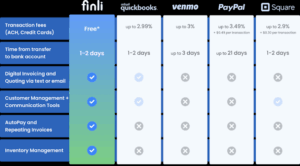
Cost is predictable and low. At $39 monthly, Finli provides invoicing, payment processing with competitive rates (0% ACH fees), CRM, and full accounting integration. That’s a fraction of what specialized platforms cost.
Flexibility grows with your business. As you add new service types or change how you bill clients, the platform adapts without requiring expensive reconfiguration.
Scalability is built in. Whether you have 5 clients or 500, the platform handles the volume without degrading or requiring an expensive upgrade.
The Honest Assessment: When to Switch from Specialized Software
If you’re using industry-specific software and considering alternatives, here’s what actually matters.
Calculate your actual monthly cost for specialized software plus any complementary tools you’re using. Now calculate what an all-in-one platform would cost. The difference is often surprising. You might save $100-300 monthly by consolidating.
Assess whether specialized features are actually solving real problems or just existing because the software was designed that way. If you’re not using 70% of the specialized features, the platform isn’t pulling its weight.
Evaluate integration costs. How much time do you spend reconciling data between the specialized platform and other business tools? That time has real value. All-in-one platforms eliminate much of this overhead.
Consider switching costs honestly. Yes, migrating to a new system takes effort. But if you’d save hours monthly on reconciliation and administration, the switching effort pays back quickly.
Takeaways
Specialized industry software isn’t bad. It’s just overpriced for many small businesses whose actual needs don’t justify the premium. You trade flexibility and affordability for workflows built for your industry.
For most small service-based businesses, an all-in-one platform handles 95% of what you need. It costs less. It integrates better. It’s simpler to manage. The 5% of highly specialized features you might miss rarely justify the cost premium of specialized software.
This week, evaluate whether your current software actually justifies its cost. Are you using it fully? Is it integrated properly with your other business tools? Would an all-in-one alternative save you money and administrative work?
Get started at finli.com or reach out to support@finli.com if you have questions.