
Tax season doesn’t have to mean scrambling through receipts at midnight. The difference between calm tax filing and panic comes down to spreading the work across the entire year instead of cramming it into April.
You probably spend around 40 hours per year on federal taxes. Most of that time gets wasted reconstructing information that should have been organized from the start. A tax planning calendar breaks this into small monthly tasks that take 30-60 minutes each.
The result? No surprises, no scrambling, and better decisions throughout the year.
(Source: National Small Business Association)
What You Need to Get Ahead
A tax planning calendar helps you stay organized by breaking tax prep into small monthly tasks. Instead of one overwhelming week in April, you spend 30-60 minutes each month handling specific actions.
This approach gives you three advantages: you catch deductions throughout the year instead of forgetting them, you can adjust estimated payments based on actual performance, and you make strategic decisions while there’s still time to implement them.
Your 2026 Tax Calendar
Here’s what to do each month. We’re in early February right now, so start here and work forward.
February-March: Close Out 2025
Gather your 2025 tax documents: 1099 forms from clients, 1099-K from payment processors, receipts for major purchases. Reconcile your Q4 bank statements.
File your 2025 return by April 15, 2026. Filing in March gives you breathing room if problems arise.
Calculate your 2026 estimated tax liability. The IRS requires quarterly payments if you expect to owe $1,000 or more. Mark these dates on your calendar now:
– April 15, 2026 (Q1 payment)
– June 17, 2026 (Q2 payment)
– September 15, 2026 (Q3 payment)
– January 15, 2027 (Q4 payment)
Set up your systems: dedicated business bank account, simple filing system for receipts, and accounting software connected to your accounts.
April: First Quarterly Payment
Make your first quarterly payment by April 15, 2026. Missing this triggers penalties.
Review your Q1 financials. Compare revenue and expenses to your projections. If you’re significantly ahead or behind, adjust your remaining quarterly payments.
May: Audit Your Deductions
Review deductions you might be missing: home office expenses, vehicle mileage, health insurance premiums, retirement contributions, professional development.
Choose your vehicle tracking method (standard mileage or actual expenses) and stick with it all year.
June: Second Quarterly Payment
Make your second quarterly payment by June 17, 2026.
Conduct a mid-year financial review. If your margins are shrinking, figure out why now.
July: Plan Year-End Moves
You have six months to implement changes that reduce your tax bill. Consider accelerating deductible expenses into 2026 if you expect higher income this year.
Evaluate retirement contributions. SEP-IRAs and Solo 401(k)s offer substantial tax-deferred savings if you’re self-employed.
August: Document Everything
Review January through July expenses and verify you have receipts. Request copies from vendors while transactions are recent.
Check that your estimated tax payments processed correctly through your IRS online account.
September: Third Quarterly Payment
Make your third quarterly payment by September 15, 2026.
By now you have a clear picture of annual income. Adjust this payment to reflect reality.
Start identifying 2027 expenses that could be moved into 2026 if beneficial.
October: Research Tax Changes
Tax laws change frequently. Spend 30 minutes understanding what’s coming for 2027.
Common changes: depreciation rules, deduction limits for meals and entertainment, retirement contribution limits.
November: Finalize Strategy
Confirm planned equipment purchases, expense accelerations, and retirement contributions are on track to happen by December 31.
Calculate estimated annual income versus total payments made. If you’ll owe more than expected, you have one more chance to make a payment in January.
December: Execute
Make planned purchases before December 31. Confirm retirement contributions process. Pay outstanding business expenses you want to deduct this year.
Organize your entire year of documentation. Schedule your accountant meeting for January or February.
January: Last Quarterly Payment
You should have made your final quarterly payment by January 15, 2027. This covered Q4 2026.
If you missed it, make that payment now to minimize penalties.
Common Mistakes to Avoid
Skipping estimated payments triggers automatic penalties based on what you owe and when you should have paid it. These penalties apply regardless of the reason.
Forgetting to track deductible expenses means leaving money on the table. That conference, software subscription, or client meeting mileage are legitimate deductions, but only if you document them.
Mixing personal and business expenses creates hours of sorting work. Open separate accounts and eliminate this problem.
How Finli Simplifies Tax Planning
Tax planning requires tracking income, organizing expenses, and maintaining documentation year-round. Manual systems make this time-consuming.
Starting with Finli now means that when you sit down to prepare your 2026 taxes in early 2027, everything will already be organized. No more scrambling to reconstruct a year’s worth of transactions.
Finli automatically organizes your financial information going forward:
Every invoice and payment creates a permanent record that’s organized, searchable, and ready for tax time. You’re not reconstructing revenue from bank statements.
Built-in CRM keeps customer information, payment history, and invoices in one place. When your accountant needs revenue by client or transaction details, you pull that information in seconds.
QuickBooks integration syncs income and expenses automatically. No double entry, no manual reconciliation, no wondering if you recorded everything correctly.
Real-time payment tracking shows exactly when money comes in, helping you manage cash flow for quarterly estimated payments.
Because Finli handles invoicing, payment processing, and financial tracking in one place, you spend less time jumping between tools. Business owners report recovering 3-5 hours weekly in administrative tasks—time that becomes especially valuable during tax season.
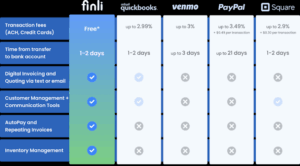
Start now, and when you’re preparing your 2026 taxes in early 2027, everything will already be organized. Every feature comes included at $39/month with 0% ACH fees.
Ready to stop scrambling at tax time? Get started at finli.com or reach out at support@finli.com.
Start Where You Are
You don’t need to implement everything at once. Start at the current month and work forward.
If you’re stressed about your 2025 taxes, gather your documentation and file your return. Then commit to following this calendar for the rest of 2026.
A tax planning calendar is a simple system that works for any size business. It transforms taxes from annual anxiety into manageable monthly tasks.
The few minutes you spend each month will save you days of stress next April.