
As small business clients wrap up their 2025 tax filings, some are breathing sighs of relief while others are lying awake at night thinking about how to avoid this stress next year. The difference between these two groups often comes down to the systems they use to manage their finances throughout the year, not their business acumen or work ethic.
For financial institutions, tax season provides valuable insights into which clients are operating with solid financial infrastructure and which are managing their businesses with tools that create unnecessary complexity. These insights create opportunities to offer genuine support that strengthens relationships while helping businesses operate more efficiently.
Understanding What Tax Preparation Actually Reveals
Tax preparation forces business owners to confront their financial systems in ways that normal operations don’t. During regular business cycles, owners can work around inadequate tools. They remember which customers still owe money, they keep mental notes of major expenses, they juggle information across multiple platforms without fully realizing the cost.
Tax season eliminates that flexibility. Accountants need complete records, organized by category, with documentation readily available. When business owners can’t produce this information easily, it’s not because they’re disorganized people. It’s because their financial tools weren’t designed to maintain the records that accountants and the IRS require.
The businesses that breeze through tax preparation typically have integrated systems where invoicing, payment processing, and expense tracking happen in one connected platform. Every invoice sent automatically becomes part of their income documentation. Every payment received is recorded and categorized. When their accountant requests information, they can generate reports in minutes rather than spending hours reconstructing their year from scattered sources.
The businesses that struggle often work just as hard but use disconnected tools that don’t communicate. They process payments through one platform, send invoices through another system, and track expenses in spreadsheets. Come tax season, they’re manually reconciling these sources, hunting for missing documentation, and discovering gaps in their records that can’t be easily filled.
Common Patterns That Suggest Better Tools Would Help
Certain tax season challenges signal specific gaps in financial infrastructure. When business owners mention spending days gathering documentation, it usually means their payment processing happens separately from their accounting. When they discover they can’t easily track income by customer or project, it indicates their invoicing system doesn’t integrate with their financial reporting.
Business owners who express surprise at their tax liability often lack real-time visibility into their financial position throughout the year. They can see their bank balance, but they don’t have clear insight into outstanding receivables, upcoming expenses, or their true cash position. This makes quarterly estimated tax payments particularly challenging because they’re working from incomplete information.
Missing deductions frequently result from inadequate expense tracking rather than lack of knowledge about what’s deductible. When businesses don’t have systematic ways to categorize and document expenses as they occur, they often can’t reconstruct these costs months later when preparing taxes. The deductions exist; the documentation doesn’t.
Multiple subscription costs for financial tools sometimes become apparent during tax preparation when business owners review their annual expenses. They might discover they’re paying separately for payment processing, invoicing software, accounting tools, and customer management systems. Subscriptions accumulate gradually but total hundreds of dollars monthly.
What These Patterns Mean for Your Relationship
These challenges affect more than just tax season. They indicate how businesses manage their finances year-round and suggest opportunities where financial institutions can provide meaningful support.
Businesses struggling with scattered documentation likely have deposits flowing to multiple platforms. When payment processing happens through Square or PayPal rather than integrated with their primary banking relationship, those funds often sit in external accounts before eventually making their way to your institution, if they do at all.
Poor visibility into financial position affects credit conversations. When business owners can’t easily see their complete financial picture, they may delay approaching you about working capital needs until situations become urgent. Better financial visibility enables more proactive conversations about growth financing or seasonal credit lines.
The administrative burden of disconnected systems consumes time that business owners could spend growing their revenue. Small business owners who spend hours weekly on financial reconciliation are paying an opportunity cost that affects both their business growth and their capacity to engage thoughtfully with their banking relationship.
Starting Supportive Conversations
Approaching these conversations requires care. The goal isn’t to suggest that clients are managing poorly, but to understand whether their current systems are serving them well and where you might be able to help.
Simple questions open these discussions naturally. “How did tax preparation go this year?” invites business owners to share their experience without feeling judged. Many will volunteer information about challenges they faced or time they spent on preparation.
When clients mention specific struggles, ask follow-up questions that demonstrate genuine interest. If they describe spending days gathering documentation, you might ask about their current process for tracking income and expenses. If they express frustration with multiple disconnected systems, inquire about which tools they’re currently using and why they selected those particular solutions.
The timing matters. These conversations work best when business owners are fresh from experiencing the pain points. A conversation now, when tax preparation is top of mind, feels timely and relevant. The same conversation in July feels random and potentially sales-focused.
Connecting Challenges to Solutions
When business owners describe challenges that stem from inadequate financial infrastructure, you can introduce solutions without making them feel like they’ve been doing something wrong. How you frame these conversations makes an enormous difference in how they’re received. The difference between feeling supported and feeling criticized often comes down to positioning infrastructure improvements as natural business evolution rather than corrections of past mistakes.
Rather than suggesting their current approach is incorrect, acknowledge that many businesses end up with fragmented systems because they adopted tools one at a time as needs arose. A business might have started with basic invoicing software, added a payment processor when clients requested card payment options, and subscribed to accounting software when their bookkeeper required it. Each decision made sense individually; the fragmentation emerged gradually.
Position integrated solutions as natural evolution rather than correction. Businesses that started with basic tools may have reached a point where consolidated platforms would serve them better. This isn’t about fixing mistakes. It’s about matching tools to current business scale and complexity.
How Finli Addresses the Root Causes for Next Year
If your small business clients struggled through tax preparation this year, now is the time to help them implement systems that will make next year’s tax season completely different. Finli provides financial institutions with a comprehensive platform that addresses the infrastructure gaps tax season reveals, ensuring businesses enter 2027 tax season with organized, complete records.
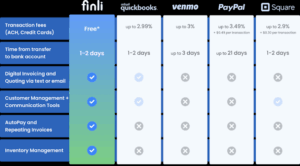
The platform integrates invoicing, payment processing, and customer management in one system under your institution’s brand. When businesses send invoices through Finli starting today, those transactions automatically become part of their financial records throughout 2026. The manual reconciliation that consumed hours during this tax season simply won’t exist next year when all financial activity flows through one connected system.
Real-time reporting gives business owners visibility into their complete financial picture throughout the year: outstanding receivables, categorized expenses, and actual cash position. This visibility supports better quarterly tax payment decisions throughout 2026 and means they’ll enter 2027 tax season with accurate records already in place.
For financial institutions, Finli’s white-labeled approach means clients access these capabilities through your platform, reinforcing their connection to your institution while generating the organized records that make future tax preparation straightforward. Business owners who adopt integrated infrastructure now will spend the next twelve months building clean financial records instead of facing another chaotic tax season.
Following Through After Implementation
The businesses most motivated to improve their financial systems are those currently feeling the pain of inadequate tools. This makes now ideal for these conversations, but the support shouldn’t end once you’ve introduced better solutions.
Check in with clients who adopted new systems to ensure they’re experiencing the benefits they expected. Ask whether the integrated approach is saving them time and reducing complexity. Inquire about what aspects they find most valuable and whether they’re discovering features they hadn’t anticipated needing.
Use these conversations to reinforce the relationship. When business owners describe how much easier their financial management has become, acknowledge that you understand the challenges they faced and you’re glad you could help address them. This positions you as a partner who genuinely cares about their operational success, not just their banking transactions.
Takeaways
Tax season reveals which small business clients are working with financial infrastructure that serves them well and which are managing despite inadequate tools. These insights create opportunities for financial institutions to offer genuine support that addresses real operational challenges while strengthening banking relationships.
The businesses struggling through tax preparation with scattered records and disconnected systems aren’t disorganized. They’re using tools that weren’t designed to work together. Financial institutions that recognize this distinction can introduce integrated solutions without making clients feel judged or criticized.
Platforms like Finli enable financial institutions to offer comprehensive financial infrastructure under their own brand, addressing the root causes of tax season struggles while keeping deposits and relationships consolidated within the primary banking relationship. When implemented now, these systems ensure clients build organized records throughout 2026 that make next year’s tax season dramatically easier. The result is clients who operate more efficiently, financial institutions that provide more value, and partnerships built on genuine operational support rather than transactional banking services.
(Source: ZipDo Bookkeeping Statistics 2025, American University Tax Literacy Survey, NerdWallet Small Business Tax Statistics)