
Financial institutions spend thousands training relationship managers on product features, underwriting criteria, and compliance requirements. Yet many overlook the most fundamental skill: asking the right questions. The difference between a transactional banking relationship and a strategic partnership often comes down to what relationship managers ask during client conversations.
47% of businesses cite dedicated relationship manager support as a top criterion for choosing their primary bank. However, support only creates value when relationship managers understand what’s actually happening in their clients’ businesses. Generic quarterly reviews that focus on account balances and loan utilization miss the operational realities that determine whether businesses succeed or struggle.
Business owners can immediately tell the difference between someone going through a checklist and someone who wants to understand their challenges and opportunities. The questions you ask signal whether you’re genuinely interested in their success or simply managing accounts.
(Source: McKinsey – Banking Matters)
Why Most Business Banking Conversations Stay Surface-Level
Traditional relationship management follows predictable patterns. Quarterly reviews cover account activity, loan balances, and perhaps a generic “How’s business?” The conversation stays surface-level because the questions don’t invite deeper engagement.
Business owners respond with equally surface-level answers. “Business is good” or “We’re staying busy” reveals nothing about the operational challenges keeping them up at night. The relationship manager leaves thinking everything is fine while the business owner concludes their bank doesn’t really understand their business.
This creates missed opportunities on both sides. The institution fails to identify credit needs or emerging risks. The business owner doesn’t recognize how their financial partner could help solve operational challenges. Both parties maintain a transactional relationship when a strategic partnership could benefit everyone.
The root issue isn’t lack of care. Most relationship managers genuinely want to help their clients succeed. They simply haven’t learned which questions uncover meaningful information and create openings for deeper partnership.
Questions About Payment Collection and Cash Flow
Effective relationship management starts with understanding how businesses actually operate day-to-day, not just how their accounts perform quarter-to-quarter.
“How long does it typically take for your customers to pay invoices?” This question reveals cash flow challenges that traditional financial statements miss. When a business owner explains they wait 45-60 days for payment on net-30 terms, you’ve identified a concrete problem that affects loan payment consistency and deposit stability.
“What happens when customers don’t pay on time?” Many businesses lack efficient collection processes, leading to irregular cash flow that creates unnecessary stress. When you learn that a property manager spends hours each week calling tenants about late rent, or a contractor manually sends payment reminders for every invoice, you’ve found operational friction that better systems could eliminate.
“How much time do you spend each week on invoicing and payment follow-up?” Business owners often underestimate this until they calculate it, discovering they lose 10-15 hours weekly to tasks that could be automated. A consulting firm owner might realize they’re spending half a day weekly creating invoices and another half-day chasing payments.
“How does your cash flow change throughout the year?” This reveals timing needs that generic credit lines don’t address effectively. A landscaping company with revenue concentrated April through October has different needs than a tax preparation firm busy January through April. Understanding these patterns enables proactive credit structuring rather than reactive responses to cash crunches.
Questions About Growth and Capacity
Business owners think about growth constantly. Asking smart growth questions positions you as a partner in that growth rather than an observer of it.
“What would you need to take on 50% more business tomorrow?” This surfaces operational bottlenecks. Often, the constraint isn’t capital but equipment, staff, or administrative systems. A contractor might explain that they could handle more projects but spend so much time on invoicing and payment collection that they can’t pursue new work.
“How do you currently find new customers, and what’s working best?” This reveals whether growth is limited by operational capacity or market reach. A property management company getting all their business through referrals faces different challenges than one investing heavily in digital marketing.
“Are there projects or customers you’ve had to turn down recently?” This uncovers whether the business is capacity-constrained, credit-constrained, or facing other limitations. You might discover a professional services firm turning down retainer clients because they lack systems to manage recurring billing efficiently.
Questions That Catch Problems Early
The best relationship managers identify challenges before they become crises.
“Are you seeing any changes in how quickly your customers pay?” This catches deteriorating collection patterns early. When a business that typically collects in 30 days starts seeing 45-50 day payment cycles, that’s an early warning signal that affects cash flow and loan payment ability.
“How are things with your main suppliers?” This reveals upstream pressures that might impact the business. When suppliers tighten credit terms or demand faster payment, it creates cash flow strain that might not show up in financials for months.
“What happens if you get a large unexpected expense next month?” This surfaces whether businesses have reserves or would face crisis. Many profitable businesses operate so close to the edge that one significant unplanned cost creates serious problems.
Questions About Current Systems and Tools
Understanding how businesses manage their operations reveals opportunities to add value beyond traditional banking products.
“What software or platforms do you use to run your business?” This identifies whether they’re cobbling together disconnected systems. When a contractor mentions using QuickBooks for accounting, Square for payments, and spreadsheets for customer management, you’ve identified fragmentation that creates inefficiency and costs hundreds of dollars monthly.
“What’s most frustrating about how you currently handle invoicing and payments?” This invites specific complaints that lead to concrete solutions. Business owners often accept operational friction until someone asks about it directly. You might learn they’re paying 2.9% on every credit card transaction or spending hours reconciling payments across multiple platforms.
“If you could eliminate one administrative task completely, what would it be?” The answer is often payment follow-up, invoice creation, or financial reconciliation—exactly the areas where integrated tools create the most value.
How Finli Helps You Act on What You Learn
Asking good questions only creates value when you can actually help solve the problems you uncover. When business owners describe spending hours on invoicing, waiting weeks for payment, or juggling multiple disconnected systems, you need solutions to offer.
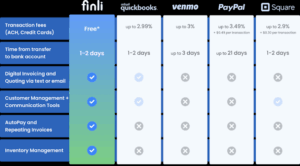
Finli provides financial institutions with a white-labeled platform that addresses the operational challenges these questions reveal. When a contractor explains they’re spending 10 hours weekly on invoicing and payment follow-up, you can introduce automated invoicing with integrated payment options and reminders. When a property manager describes cash flow gaps from late-paying tenants, you can offer AutoPay functionality that ensures consistent, predictable payments.
The platform’s 0% ACH processing eliminates the transaction fees that eat into small business margins. When you learn through your questions that a business is paying hundreds monthly in processing fees, you can show them how to keep more of what they earn while strengthening their banking relationship with your institution.
Because Finli operates entirely under your brand, introducing these capabilities strengthens rather than dilutes your banking relationships. The conversations that start with smart questions naturally lead to integrated solutions that solve real operational problems. Business owners see you as a partner who listened to their challenges and provided concrete help, not just another vendor offering generic products.
The platform also provides you with real-time visibility into business performance that makes future conversations even more valuable. When you can see transaction patterns, payment timing, and cash flow trends, you ask better questions and offer more timely support.
Using What You Learn
Take notes during conversations and reference them in future interactions. When a business owner mentioned a seasonal cash flow challenge three months ago, follow up to see how they navigated it. This demonstrates you were listening and you care.
Time your outreach based on what you’ve learned. If a business typically orders inventory in August for their busy fall season, reach out in July about working capital options. This proactive approach feels helpful rather than sales-driven.
Share relevant information based on their specific situation. When you read an article about challenges in a client’s industry, send it along with a note. These small actions reinforce that you think about their business beyond scheduled reviews.
Takeaways
The questions relationship managers ask determine whether they build strategic partnerships or maintain transactional relationships. Business owners can immediately tell the difference between generic account reviews and genuine interest in their success.
Focus questions on operational reality rather than just financial performance. Understanding payment collection processes, administrative burden, seasonal patterns, and capacity constraints reveals opportunities that account balances alone never show. When a contractor describes spending hours weekly on payment follow-up or a property manager explains cash flow gaps from late rent payments, you’ve identified specific challenges you can help solve.
Growth-focused questions position you as a partner in business development. Asking about capacity constraints, customer acquisition, and opportunities they’ve had to decline demonstrates commitment to helping clients succeed. When you learn a business is turning down work because of administrative limitations, you can introduce tools that remove those constraints.
Early warning questions catch problems before they become crises. Exploring payment timing changes, supplier relationship shifts, and emergency preparedness enables proactive support rather than reactive crisis management. The business owner who mentions customers starting to pay slower gives you the chance to address cash flow challenges before they impact loan payments.
Success requires acting on what you learn. Finli enables you to address the operational challenges these questions uncover through integrated invoicing, automated payment collection, and tools that consolidate the disconnected systems costing businesses time and money. When you can solve the problems your questions reveal, you transform banking relationships from accounts to manage into partnerships that generate value for everyone involved.