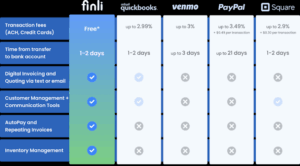

Small businesses are generating deposits every day. The question is whether those deposits are landing at your institution or somewhere else. More than half of small businesses in the U.S. now work with non-bank fintechs, and that shift has significantly decreased basic transaction accounts and low-cost business deposits at traditional financial institutions. Every payment processed through Square, every invoice managed in QuickBooks, every transaction handled by PayPal represents deposits that could be sitting in your institution instead.
The opportunity remains substantial. The top 25 banks hold roughly 84% of primary SMB relationships, but surveys consistently show that small business owners prefer banking with traditional institutions. They value local knowledge, personalized advice, and stability. The disconnect isn’t about trust-it’s about the tools your institution offers. Financial institutions that close the gap between what small businesses need and what traditional banks offer will capture the deposit growth that product-focused competitors continue missing.
(Source: BAI Banking Strategies)
Why Deposits Are Leaving Traditional Banks
Small businesses don’t move their deposits intentionally. They move them incrementally, one operational decision at a time. A contractor signs up for Square because they need to accept card payments on job sites. A consulting firm starts using Stripe for online invoicing. A property management company adopts PayPal for tenant payments. Each decision solves an immediate problem-but each one also redirects cash flow away from your institution.
The pattern accelerates once it begins. Payment processors don’t just handle transactions. They hold funds, offer instant loans based on payment history, and provide cash flow tools that create operational dependency. By the time funds eventually reach your institution, they’ve already served someone else’s balance sheet.
75% of small businesses now go outside their financial institution to meet at least one financial need. They’re not leaving because they’re unhappy with their bank. They’re leaving because their bank doesn’t offer integrated solutions that address how they actually operate.
(Source: Jack Henry Datos Matrix Report 2025)
The Deposit Growth Equation
Deposit growth in small business banking follows straightforward logic: capture the payment activity, capture the deposits. When businesses process payments through your platform, funds flow directly into accounts at your institution. When they process payments elsewhere, deposits arrive later-if they arrive at all.
This creates a clear strategic priority. Financial institutions pursuing deposit growth need to provide the operational tools that generate payment activity in the first place: invoicing capabilities that accelerate collection, payment processing that keeps funds in-house, and business management tools that create daily engagement with your platform rather than someone else’s.
37% of small businesses say they will definitely or probably switch financial institutions within the next two years. That number jumps to 44% among millennial- and Gen Z-led businesses. This represents both risk and opportunity. The businesses considering switching are actively seeking better digital banking experiences, and the institutions that provide those experiences will capture the deposits that follow.
(Source: Jack Henry Datos Matrix Report 2025)
What Small Businesses Actually Need
Small business owners spend an average of $340 monthly cobbling together disconnected financial tools. They’re not spending this money because they enjoy complexity-they’re spending it because their bank doesn’t offer alternatives. Integrated invoicing, payment collection, customer management, and cash flow visibility remain gaps that traditional banking products simply don’t address.
85% of small businesses want tighter integration between their banking and accounting systems. 77% say their primary financial institution offers few products or services they’d be willing to pay for. The gap isn’t about rates or fees-it’s about operational utility.
The institutions capturing deposit growth understand this distinction. They’re not competing on checking account features. They’re competing on whether businesses can run their operations through the bank’s platform. When the answer is yes, deposits consolidate naturally. When the answer is no, deposits scatter across whatever platforms solve immediate problems.
(Source: Jack Henry Datos Matrix Report 2025)
Building Payment Processing Into Your Value Proposition
Payment processing represents the most direct path to deposit growth because it captures funds at their source. When a business collects a $5,000 payment through your platform, those funds arrive in your institution immediately. When they collect the same payment through Square or Stripe, the funds sit in processor accounts before eventually transferring-often to wherever the business finds most convenient.
Small businesses now expect payment acceptance integrated directly into their banking experience. Institutions offering seamless payment processing with favorable fee structures can recapture deposit flows currently leaking to third-party processors. This isn’t just about competing on processing rates-it’s about creating an integrated experience where payments, invoicing, and banking operate through a single platform. When businesses can manage their complete payment cycle without leaving your ecosystem, they naturally consolidate their financial activity with your institution.
Invoicing and Receivables Management Drive Cash Flow
The average small business waits 29 days to collect on net-30 invoices, with many waiting 45, 60, or even 90 days. The institutions that help businesses accelerate collection don’t just improve customer relationships-they generate faster deposit velocity.
Professional invoicing with integrated payment options removes friction from the collection process. When an invoice includes one-click payment buttons for ACH or credit card, customers can pay immediately. This convenience accelerates payment by an average of 12 days compared to traditional methods. Automated payment reminders compound this effect, dramatically increasing on-time payment rates without requiring manual follow-up from business owners.
(Source: PYMNTS B2B Payments Report)
Creating Daily Engagement That Protects Relationships
Traditional banking creates sporadic touchpoints: account logins, loan payments, occasional branch visits. Operational platforms create daily engagement that transforms the banking relationship entirely.
When small businesses send invoices, process payments, and manage customer relationships through your platform, they interact with your institution multiple times daily. This frequency builds relationship depth and switching costs that extend well beyond the inconvenience of moving an account. The businesses using your tools daily are the businesses that stay.
91% of small and medium-sized businesses using integrated digital solutions report increased revenue. Features like cash flow forecasting and personalized dashboards have moved from differentiators to expected capabilities. The institutions providing these tools build engagement patterns that protect deposits even when competitors offer marginally better rates.
(Source: Jack Henry Datos Matrix Report 2025)
Real-Time Data Creates Proactive Service Opportunities
Traditional banking data shows where a business was 30-90 days ago. Real-time operational data transforms how institutions can serve small business clients. When you can see payment collection slowing, cash flow tightening, or seasonal patterns developing as they happen, you can reach out with relevant solutions before problems become crises.
47% of small businesses cite dedicated relationship manager support as a top criterion for choosing their primary bank. But relationship management only creates value when relationship managers have visibility into what’s actually happening in their clients’ businesses. Real-time operational data enables the consultative conversations that justify relationship investments and differentiate your institution from competitors still relying on quarterly financial reviews.
(Source: McKinsey Banking Matters)
Implementation Speed Determines Competitive Position
Building comprehensive digital solutions in-house requires substantial investment and extended timelines. The institutions winning deposit growth aren’t necessarily those with the most resources-they’re those that can move quickly enough to capture business owners making infrastructure decisions right now.
99% of new SMB banking contracts in 2025 were hosted in the cloud, reflecting the industry’s shift toward faster deployment and continuous innovation. White-labeled platforms enable this speed. Rather than building from scratch, institutions can deploy proven solutions under their own brand, test market adoption, and measure business impact before committing to deeper technical investments.
(Source: Jack Henry Small Business Banking Analysis)
How Finli Enables Your Deposit Growth Strategy
Finli provides financial institutions with the operational platform that transforms deposit strategy from aspiration to execution. The platform addresses each component of deposit growth directly: payment processing with 0% ACH fees keeps transaction costs from eroding small business margins while ensuring deposits flow directly into accounts at your institution. Automated invoicing and payment collection accelerate cash flow. Integrated CRM consolidates the business tools that small businesses currently pay for separately.
Finli offers a “Try Before You Integrate” approach, allowing financial institutions to launch white-labeled business services quickly, without developer resources, then deepen integration as adoption proves successful. Prebuilt connections with Q2 and Jack Henry enable seamless deployment within your existing infrastructure. The platform creates natural daily touchpoints with your small business clients-when they send invoices, process payments, or check cash flow metrics, they’re engaging with your institution’s branded platform while keeping deposits consolidated where they belong.
Measuring Success
Deposit growth strategy requires metrics beyond traditional measures. Account openings matter, but they don’t capture relationship depth. Track payment processing volume through your platform to understand how much transaction activity you’re capturing versus losing to external processors. Monitor invoice creation and payment collection metrics to measure operational tool adoption. These operational metrics reveal deposit growth potential before it appears in balance sheet reports-a business processing increasing payment volume through your platform will generate increasing deposits.
Takeaways
SMB deposit growth in 2026 will favor institutions that understand a fundamental shift: deposits follow operational activity. When businesses process payments, manage invoices, and run their financial operations through your platform, deposits consolidate naturally. When they run these operations elsewhere, deposits scatter.
The strategic priorities are clear: provide payment processing that captures funds at their source, offer invoicing that accelerates collection, create daily engagement through operational tools, and build real-time visibility that enables proactive relationship management.
Small businesses aren’t looking for better checking accounts. They’re looking for financial partners who understand their complete operational picture. The institutions that deliver this comprehensive support will capture the deposit growth that product-focused competitors continue losing to more integrated alternatives. The opportunity to become that partner has never been clearer.