
Over 40% of small businesses face slower customer payments during Q4 and into Q1, creating cash flow gaps that threaten otherwise healthy operations. As your small business clients close out December and prepare for January’s predictable slowdown, they’re juggling multiple pressures at once: outstanding invoices that customers won’t pay until after the holidays, fixed costs that continue regardless of revenue timing, and the pressure of starting the new year without the cash cushion they need.
This seasonal vulnerability creates direct risk for financial institutions. When a contractor waits until mid-February for December project payments while January’s loan payment comes due, that’s not a business failure. It’s a timing problem your institution can help solve. The banks that recognize these challenges as operational issues rather than credit problems position themselves as indispensable partners while protecting their own portfolios from preventable stress.
(Source: Federal Reserve 2024 Report on Payments in Small Business Credit)
The Seasonal Pattern That Threatens Your Best Clients
Seasonal cash flow pressure affects far more businesses than the obvious candidates like landscapers or holiday retailers. Construction companies completing year-end projects wait 60-90 days for final payments. Professional services firms see client budgets freeze during December and thaw slowly in February. Property management companies deal with tenant payment delays during the holidays.
The numbers reveal the scope of this challenge. 51% of small businesses identify uneven cash flow as a top financial challenge, and 82% of SMEs have encountered cash flow difficulties, with seasonal shifts in sales ranking as the second most common trigger. These aren’t struggling businesses. They’re operationally sound companies caught in predictable timing gaps.
(Source: 2025 Small Business Credit Survey, Novuna Business Cash Flow Research)
The real vulnerability becomes clear in January. Consumer spending patterns show a clear holiday spike in Q4 followed by a significant trough in Q1. Businesses that burned through cash reserves managing holiday operations enter the new year with depleted accounts and outstanding receivables that won’t convert to cash for weeks.
Why Traditional Banking Responses Fall Short
When small businesses face seasonal cash flow gaps, their typical options create new problems. They max out credit cards at 20%+ interest rates, delay vendor payments, request emergency credit line increases that appear as heightened risk, or take on short-term loans with terms that don’t match their actual recovery timeline.
These reactive solutions address symptoms rather than causes. A business that struggles to collect payments in December will struggle again next December unless something fundamental changes. Financial institutions that only offer credit products for seasonal challenges are essentially lending against the same problem year after year.
The more effective approach recognizes that seasonal cash flow stress often stems from collection timing rather than business fundamentals. When businesses can accelerate customer payments, the gap shrinks and sometimes disappears entirely.
Faster Payment Collection Solves the Root Problem
The average small business waits 29 days to collect on net-30 invoices during normal periods. During Q4 and Q1 seasonal transitions, those delays extend significantly as customers prioritize their own cash management over vendor payments. Every additional day added to collection time ties up cash that businesses need for payroll, rent, and loan payments.
Modern payment collection tools directly address this timing problem. Digital payment options embedded in invoices let customers pay immediately rather than adding the invoice to a stack of year-end paperwork. Automated reminder sequences maintain collection pressure without requiring business owners to chase payments manually during their busiest or slowest periods. AutoPay functionality converts irregular customer payments into predictable recurring revenue streams that smooth seasonal volatility.
The impact is measurable. Digital payment options accelerate collection by an average of 12 days compared to traditional invoicing methods. For a business with $50,000 in outstanding December receivables, that acceleration can mean the difference between a cash-stressed January and starting the year with working capital intact.
(Source: PYMNTS B2B Payments Report)
How Financial Institutions Can Provide Seasonal Support
The most valuable response to seasonal pressures isn’t reactive lending. It’s proactive tools that help businesses manage the underlying collection timing problems. Financial institutions that provide these capabilities demonstrate genuine partnership while reducing their own portfolio risk.
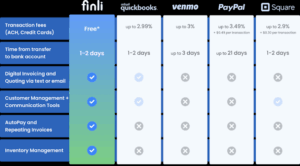
Finli’s integrated payment processing accepts ACH, credit cards, and mobile payments, removing friction that delays customer payments. When paying an invoice requires nothing more than clicking a button in an email, customers pay faster, even during busy holiday periods when payment processing often gets deprioritized. The 0% ACH processing becomes particularly valuable during tight-margin periods when businesses can’t afford to lose 2.5-3% of each payment to transaction fees.
Automated receivables management maintains collection pressure without requiring business owner attention during their busiest or slowest periods. Reminder sequences send strategic follow-ups before due dates, on due dates, and at intervals after, all automatically. This persistence matters enormously during seasonal transitions when customers are distracted by their own year-end priorities.
AutoPay functionality transforms recurring customer relationships into predictable monthly revenue streams. For businesses with subscription models, retainer arrangements, or regular repeat customers, payments process automatically on scheduled dates. January’s cash flow is secured before the holiday season even begins, and the payments arrive regardless of whether customers remembered to process invoices.
The Portfolio Protection Benefit
Helping small business clients manage seasonal cash flow doesn’t just serve them. It directly protects your loan portfolio. The connection between collection efficiency and loan performance is straightforward: businesses that collect customer payments faster have more consistent cash available for loan payments.
Consider the typical seasonal stress scenario. A contractor finishes a $40,000 project in December but won’t receive full payment until February. Meanwhile, their January loan payment processes against an account depleted by holiday-period fixed costs. The business isn’t failing. They’re simply caught in a timing gap.
Now consider that same contractor with automated payment collection. The December invoice includes one-click payment options and automated reminders. The customer pays in late December instead of February. The contractor enters January with cash in the account, makes the loan payment without stress, and your portfolio shows consistent performance rather than seasonal volatility.
This pattern scales across your small business portfolio. Every client you help accelerate collections represents reduced default risk, more stable deposit balances, and fewer emergency credit requests driven by timing rather than business health.
Real-Time Visibility Into Seasonal Patterns
Traditional credit monitoring shows you where a business was 30-90 days ago, which isn’t helpful when you’re trying to identify seasonal stress as it develops. Real-time operational data from integrated payment platforms reveals current collection patterns and potential challenges before they impact loan performance.
Finli provides financial institutions with exactly this kind of real-time business intelligence. You see collection speed trends, outstanding receivable aging, and payment pattern changes as they happen, not months later in quarterly financial statements. This visibility enables the proactive support that distinguishes genuine partnership from transactional banking.
Positioning for the January Opportunity
Right now, your small business clients don’t have time to migrate systems. They’re in the middle of year-end chaos, managing holiday operations, and dealing with the cash flow gaps that come with slower customer payments. This is the moment to reach out proactively and ask how they’re doing. Some will need short-term lines of credit to bridge the gap until receivables come in. Others may benefit from payment deferrals or restructured terms that match their actual cash flow recovery timeline.
These conversations matter. When you reach out during a difficult period and offer real support, you demonstrate the kind of partnership that distinguishes your institution from competitors. The business owner who received a well-timed credit line in January remembers that when making decisions about where to consolidate banking relationships.
But these conversations also create a natural opening for a longer-term solution. Once you’ve addressed the immediate pressure, ask: what would it take to prevent this same situation next year? That’s when tools like Finli become relevant. Helping clients implement better payment collection systems in Q1 means they enter next December with faster collection processes already in place, reducing or eliminating the seasonal gaps that required emergency credit this year.
How Finli Enables Year-Round Support
Finli provides financial institutions with a white-labeled platform specifically designed to address the operational challenges that create seasonal stress. The platform delivers professional invoicing with integrated one-click payment options, automated reminder sequences that maintain collection pressure during holiday periods, and AutoPay functionality that converts recurring relationships into predictable monthly revenue.
Payment processing with 0% ACH fees means businesses keep more of what they collect, particularly valuable during tight-margin seasonal transitions. All payments flow directly into accounts at your institution, protecting deposit relationships while providing clients with modern collection capabilities.
Finli integrates seamlessly with existing banking systems through prebuilt connections with Q2 and Jack Henry. The “Try Before You Integrate” approach allows you to launch white-labeled business services quickly and measure adoption before deeper technical investment.
Takeaways
Seasonal pressures affect the majority of small businesses, creating predictable stress during Q4-to-Q1 transitions that threatens otherwise healthy operations. Financial institutions that recognize these challenges as timing problems rather than credit problems can provide meaningful support at exactly the right moment.
The immediate opportunity is proactive outreach. Your small business clients are experiencing cash flow gaps right now, and many could benefit from short-term credit lines, payment deferrals, or restructured terms that match their recovery timeline. Reaching out to ask how they’re doing demonstrates partnership when it matters most.
The longer-term opportunity is prevention. Once you’ve addressed immediate needs, help clients implement tools that solve the underlying collection timing problem. Accelerated payment collection through digital payment options, automated receivables management, and recurring billing can dramatically reduce or eliminate seasonal gaps. Financial institutions that offer these capabilities through white-labeled platforms like Finli give clients a path to smoother cash flow next year while strengthening the banking relationship today.