
Only 26% of small business owners feel completely confident about their tax filings. The rest of your small business clients-are approaching tax season with varying degrees of uncertainty, stress, and anxiety. As they pull together twelve months of financial records for their accountants and the IRS, they’re confronting every gap in their systems, every missing receipt, and every hour lost to disorganization.
This creates a meaningful opportunity for financial institutions. The frustration business owners feel during tax preparation makes them highly receptive to solutions that prevent the same chaos next year. By reaching out now with tools that simplify record-keeping and financial documentation, you position yourself as a genuine partner-and you set your clients up for operational excellence in 2026 that will make their 2027 tax season dramatically smoother.
(Source: FreshBooks 2025 Small Business Tax Trends Report)
Why Tax Season Creates Relationship Opportunities
Year-end pressure combined with looming tax deadlines puts enormous strain on small businesses. The top three tax-related challenges-organizing receipts, understanding complex tax laws, and identifying proper deductions-are nearly tied at 32-35% each. Small businesses spend an average of 120 hours per year on tax preparation and compliance, and 37% of owners report feelings of anxiety and confusion about the process.
This combination of stress and time pressure forces small business owners to confront which systems are no longer working for them. As they scramble through disorganized records and piece together twelve months of scattered documentation, they recognize the real cost of inadequate tools.
This moment of frustration creates a powerful opening for financial institutions. New tools implemented today won’t fix the 2025 records already headed to accountants. But business owners feeling the pain of poor systems right now are highly motivated to set themselves up for operational excellence in 2026. When you help them implement better invoicing, payment tracking, and record-keeping systems, you’re positioning them for a dramatically smoother 2027 tax season. The institutions that recognize this window and act on it build relationships rooted in solving real problems at the exact moment those problems feel most acute.
(Source: FreshBooks 2025 Small Business Tax Trends Report, American University Tax Literacy Survey)
The Record-Keeping Problem Your Clients Face
The foundation of smooth tax preparation is organized financial records throughout the year. Yet 40% of small businesses fail to update their bookkeeping records regularly, and the most common bookkeeping mistake-failing to record all transactions-affects nearly half of small businesses.
This creates a predictable crisis every January. Business owners scramble to reconstruct twelve months of financial activity from scattered receipts, multiple bank statements, and incomplete records. Accountants receive disorganized documentation that takes hours to sort through.
The average small business owner spends 10 hours per month on bookkeeping tasks-time that could be spent on revenue-generating activities if better systems were in place. Your clients need comprehensive transaction records, clear categorization that aligns with tax requirements, and documentation that’s accessible when their accountants request it. Most importantly, they need these capabilities integrated into systems they already use daily.
(Source: ZipDo Bookkeeping Statistics 2025)
What Organized Records Actually Look Like
Accountants need specific documentation to prepare accurate returns and maximize legitimate deductions. Essential tax documentation includes complete bank and credit card statements, detailed records of accounts receivable and payable, professional invoices documenting income sources, and clear expense categorization. Businesses also need records of major purchases, payroll documentation if they have employees, and records of estimated tax payments.
The challenge is that most small businesses maintain these records across multiple disconnected systems. Payment processing happens through one platform, invoicing through another, and expense tracking through a third. Reconciling these scattered records requires hours of manual work that often doesn’t happen until deadlines force it.
Financial institutions can solve this fragmentation by providing integrated platforms where payment processing, invoicing, and financial record-keeping happen in one place. When all financial activity flows through a single system, the documentation accountants need is automatically generated and organized throughout the year.
How Financial Institutions Can Position for This Moment
Tax season stress creates a natural opening for conversations about better systems. While your tools won’t retroactively organize 2025 records, the pain business owners feel right now makes them exceptionally receptive to solutions that prevent the same chaos next year.
Several capabilities position financial institutions as valuable partners during this window. Integrated invoicing and payment tracking automatically creates documentation of all business income, eliminating future scrambles to reconstruct revenue records. Transaction categorization that aligns with tax requirements reduces hours accountants spend sorting through uncategorized expenses. Real-time financial reporting gives business owners visibility into their financial position throughout the year. Clear accounts receivable aging helps businesses stay on top of collections rather than discovering outstanding invoices at year-end.
The conversation isn’t about fixing this tax season. It’s about ensuring 2026 runs smoothly from day one, so that when tax season 2027 arrives, your clients have twelve months of clean, organized records ready for their accountants.
Positioning Your Institution for Year-End Conversations
The businesses struggling through tax preparation right now will remember which institutions offered help and which offered only generic checking accounts. 47% of businesses cite dedicated relationship manager support as a top criterion for choosing their primary bank-support that becomes especially valuable when business owners are feeling the pain of inadequate systems.
Financial institutions can differentiate by proactively reaching out to small business clients during tax season with a forward-looking message. Acknowledge the stress they’re experiencing, then offer to help them set up systems that ensure next year is different. This might include introductions to integrated tools that simplify record-keeping, guidance on what documentation practices would help their accountants, or simply a conversation about their operational challenges.
The timing creates natural urgency. Business owners in the middle of tax preparation chaos are motivated to make changes. Those same conversations in June or July feel abstract. Meeting clients where they are-frustrated and looking for solutions-positions your institution as a genuine partner rather than just another service provider.
(Source: McKinsey – Banking Matters)
How Finli Sets Small Businesses Up for Operational Excellence
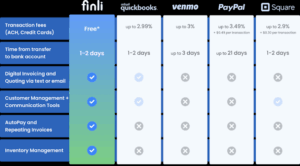
Finli provides financial institutions with a comprehensive platform that addresses the record-keeping challenges at the heart of tax preparation struggles. By offering integrated invoicing, payment processing, and financial documentation under your institution’s brand, you give small business clients the tools they need to maintain tax-ready records from day one of 2026.
Professional invoicing creates automatic documentation of all business income. Every invoice sent through Finli becomes part of a complete, searchable record that business owners can provide to accountants without reconstruction. When clients collect payments through the platform, those transactions are automatically matched to invoices, creating clear documentation of what was billed, when it was paid, and how payment was received.
Integrated payment processing with 0% ACH fees means businesses can collect payments cost-effectively while building complete transaction records. Unlike scattered payment systems that require manual reconciliation, Finli creates unified records where every payment is documented and categorized-exactly the kind of clean financial records that accountants prefer.
Customer management capabilities consolidate client information, payment history, and transaction records in one accessible location. When tax time arrives, business owners can quickly generate reports showing income by client, outstanding receivables, and payment patterns.
For financial institutions, Finli’s white-labeled approach means these capabilities appear as your institution’s services, strengthening your relationship with small business clients. The platform integrates with existing banking systems through prebuilt connections with Q2 and Jack Henry, enabling deployment without extensive IT resources.
Starting the Conversation With Clients
Tax season conversations with small business clients naturally turn to operational challenges. As they gather documentation and work with accountants, they’re acutely aware of which systems failed them and where they lost time to disorganization.
Reach out to small business clients with practical, forward-looking guidance. Ask how tax preparation is going and what’s been most frustrating. Inquire about their current systems for tracking income and expenses. Offer to discuss tools that could simplify their record-keeping starting now, so next year looks completely different.
The most receptive clients are those in the middle of the struggle. Business owners who are currently scrambling through disorganized records are highly motivated to find better solutions. Position your outreach as genuine support rather than product sales-when business owners experience your institution as a helpful resource during a stressful period, they’re naturally more receptive to exploring how your tools might solve their challenges.
Takeaways
Tax season creates predictable stress for small business owners-stress rooted in disorganized records, scattered financial documentation, and inadequate systems for tracking income and expenses throughout the year. This frustration also creates a powerful opportunity for financial institutions willing to offer solutions.
The timing matters. Business owners feeling the pain of poor systems right now are highly motivated to make changes. While new tools won’t fix the 2025 records already headed to accountants, they can ensure 2026 runs smoothly from day one. Financial institutions that reach out during tax season with forward-looking solutions meet clients at exactly the moment they’re most receptive to change.
Integrated platforms like Finli enable financial institutions to provide the record-keeping capabilities small businesses need without building these tools internally. When invoicing, payment processing, and financial documentation flow through one system under your brand, you set clients up for operational excellence in 2026-and a dramatically smoother tax season in 2027.
The institutions that help small businesses escape the cycle of tax season chaos earn loyalty that extends far beyond April. When you’re the partner who offered real solutions during one of the year’s most challenging periods, you become the institution they trust with their broader financial needs throughout the year ahead.