
Your small business clients face heightened fraud risk during the final weeks of the year, and most don’t realize it until it’s too late. Holiday scam attempts spike by as much as 309% during Q4, targeting businesses precisely when they’re most distracted by year-end deadlines, staff vacations, and irregular payment volumes.
When a business account suffers a $15,000 fraud loss during their peak revenue period, those losses cascade into missed loan payments, depleted operating capital, and damaged banking relationships.
Financial institutions that provide practical fraud prevention guidance during this vulnerable period protect both their customers and their own commercial portfolios. The connection is direct: helping your business clients avoid year-end fraud keeps their cash flow intact, which keeps their loan payments on time.
(Source: Arkose Labs, A Data-Driven Analysis of Threat Actor Behavior)
Why Year-End Creates Perfect Fraud Conditions
The holiday period creates vulnerabilities that don’t exist during normal operations. Key employees take their only available vacation time, leaving unfamiliar staff handling financial decisions. The bookkeeper who knows every legitimate supplier by name is visiting family. The owner who reviews every large payment is stretched across holiday commitments and year-end project completion. When the person who normally catches suspicious vendor invoices is skiing in Colorado, fraudsters exploit the gap.
Year-end projects compound the problem by creating urgency that bypasses normal vetting. A contractor needs materials before suppliers close for the holidays. A professional services firm brings on temporary help to complete client deliverables. Each new vendor relationship introduces risk, and the verification steps that normally protect businesses (calling references, confirming banking details, reviewing contracts) get compressed or skipped when deadlines loom.
Irregular payment patterns provide cover for fraudulent transactions. Year-end bonuses, holiday gifts to clients, charitable donations, and accelerated vendor payments all create legitimate reasons for unusual activity. A $15,000 payment to an unfamiliar recipient might be a year-end bonus, a supplier payment, or a fraudulent invoice. During the holiday rush, many business owners don’t have time to investigate which.
(Source: Federal Reserve Bank of New York, Required Absences from Sensitive Positions)
The Schemes That Spike During the Holidays
Checks remain the payment method most susceptible to fraud, with 63% of organizations experiencing attempted or actual check fraud in 2024. FinCEN’s analysis uncovered over 15,400 suspicious activity reports citing mail theft-related check fraud in a six-month period, representing more than $688 million in suspicious activity. Year-end tax payments, vendor settlements, and bonus checks create attractive targets for criminals who steal and wash checks.
(Source: AFP 2025 Payments Fraud Survey; FinCEN Financial Trend Analysis)
Business Email Compromise has become a $55 billion financial crime problem, with ACH credits now the payment method most often targeted. Fraudsters send realistic-looking invoices with familiar vendor names, slightly altered account numbers, and urgent payment requests. They research companies, learn who handles payments, and time their approaches to exploit year-end urgency, knowing that rushed staff are less likely to verify.
Gift card fraud surges during the holiday season, with 34% of US adults targeted and losses increasing by 300%. The typical scheme involves someone impersonating a company executive, urgently requesting gift card purchases for client appreciation or employee bonuses. The plausibility of these requests during December makes them particularly effective.
(Source: Nasdaq Verafin; RH-ISAC 2025 Holiday Threat Trends)
What You Can Do Right Now: Educate Your Clients
With December already underway, the most immediate action financial institutions can take is education. Many small business owners simply don’t know what to watch for. They’re focused on closing out the year, not anticipating fraud schemes. A quick email, a conversation during a branch visit, or a short guide on year-end scams can make the difference between a client catching a suspicious invoice and paying it without question.
Make sure your clients know the red flags: unexpected urgency in payment requests, slight variations in vendor email addresses or account numbers, requests to purchase gift cards for business purposes, and any pressure to bypass normal approval processes. Remind them that legitimate vendors and partners won’t mind a callback to verify payment details, and that fraudsters count on businesses being too busy to make that call.
Encourage clients to brief their staff before holiday vacations begin. The employee covering for the regular bookkeeper needs to know which vendors are legitimate, what approval thresholds exist, and who to contact if something seems off. This conversation takes fifteen minutes and can prevent thousands in losses.
Verification Protocols That Survive the Rush
Help clients establish procedures that don’t depend on individual judgment during busy periods. Dual authorization for payments above a threshold, mandatory callback verification for new vendor banking details, and documented approval workflows provide protection that works even when attention is divided. The key is making these protocols automatic rather than discretionary. When policy requires two approvals for payments over $10,000 regardless of urgency, the pressure to skip verification diminishes.
Encourage clients to document who handles what when regular staff are away. A written coverage plan that specifies approval authorities, verification procedures, and escalation contacts prevents the ad-hoc decision-making that creates vulnerability. For particularly sensitive functions, consider whether remote access should be restricted during vacations. The Federal Reserve guidance on required absences specifically notes that employees must be denied electronic access during their absence for the policy to be effective.
Activate Your Institution’s Existing Fraud Tools
Many small businesses don’t fully utilize the fraud prevention services their financial institution already offers. Year-end is the ideal time to activate these protections:
Positive Pay matches issued checks against presented checks to catch alterations and counterfeits before they clear.
ACH Blocks and Filters prevent unauthorized electronic debits from draining accounts.
Transaction Alerts provide real-time notifications for payments exceeding specified thresholds.
Multi-Factor Authentication adds verification steps for online banking and payment initiation.
Proactively reaching out to business clients about these services demonstrates partnership and protects both the client and your institution.
How Technology Reduces Year-End Vulnerability
The most dangerous aspect of year-end fraud isn’t scheme sophistication. It’s the degradation of normal verification procedures under time pressure and staff changes. Technology platforms that automate monitoring provide consistent protection regardless of who’s in the office or how busy the season becomes.
Unlike manual review processes that break down when key staff are away, automated systems examine every transaction with the same thoroughness. They identify suspicious patterns (duplicate payments to similar vendor names, unusual payment timing, geographic inconsistencies) continuously, catching problems that overwhelmed owners or unfamiliar backup staff might miss.
Integrated platforms also eliminate the blind spots fraudsters exploit. When a business processes payments through one system, pays vendors through another, and reconciles in separate software, no single person sees the complete picture. Consolidated platforms provide centralized visibility that persists regardless of staff changes.
How Finli Helps Your Clients Enter 2026 Protected
While education and protocols address immediate risks, the new year presents an opportunity to set your small business clients up with operational infrastructure that protects them year-round. Finli provides financial institutions with a white-labeled platform that consolidates payment activity into a single view, giving business owners, their staff, and your institution complete visibility into financial operations regardless of who’s in the office or what time of year it is.
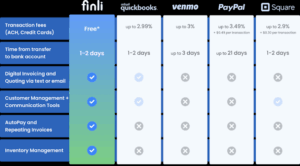
Automated invoicing and payment collection with 0% ACH fees help businesses get paid faster while eliminating the manual processes that create vulnerability during busy periods. When businesses start 2026 with streamlined operations and better cash flow visibility, they have more capacity to maintain appropriate oversight, whether it’s the holiday rush, tax season, or summer vacation schedules.
For financial institutions, Finli provides real-time insights into business client financial health that traditional monitoring can’t match. You see transaction patterns as they happen, enabling proactive relationship management throughout the year. The platform integrates with existing banking systems through prebuilt connections with Q2 and Jack Henry, and the white-label approach means clients access these capabilities through your branded interface.
The year-end period is the natural moment for these conversations. Business owners are already thinking about what worked in 2025 and what needs to change. Helping them enter 2026 with better operational tools doesn’t just protect them from next year’s fraud attempts. It strengthens their cash flow, reduces their administrative burden, and deepens their relationship with your institution.
Takeaways
Year-end fraud represents a predictable, preventable risk that financial institutions can help their clients address through education, proactive guidance, and technology. Traditional fraud prevention breaks down under holiday conditions because it relies on manual review, relationship knowledge, and consistent attention. None of these hold up when staff are on vacation, new vendors enter the picture, and normal oversight weakens.
Right now, the most valuable thing you can do is educate your small business clients about what to watch for and remind them to brief their teams before holiday vacations begin. For the longer term, help them establish verification protocols that survive busy periods and implement platforms that provide automated monitoring and centralized visibility year-round.
Financial institutions that position themselves as fraud prevention partners, not just product providers, create relationship depth that extends well beyond the holiday season. When you help a business avoid a devastating fraud loss and enter the new year with stronger operational infrastructure, that’s the foundation of a partnership that generates value for years to come.