
Your small business clients are entering the final stretch of Q4 with a familiar challenge: outstanding invoices waiting to be collected, cash tied up in accounts receivable, and the pressure of closing out the year in the strongest position possible. While they’re focused on finishing projects and meeting year-end deadlines, the cash they’ve earned sits waiting in their customers’ accounts instead of their own.
Financial institutions have a direct opportunity to change this dynamic. The tools and support you provide in these final weeks can mean the difference between clients ending the year cash-stressed or cash-strong. More importantly, the institutions that help solve this Q4 challenge position themselves as indispensable partners heading into the new year.
Why Cash Position Matters More Than Reported Revenue
Small business owners naturally focus on revenue numbers when evaluating their year. But revenue on paper doesn’t always reflect available cash. A business might show $45,000 in Q4 revenue while holding only $9,000 in the bank because customers haven’t yet paid their invoices.
This gap between earned revenue and collected cash creates real consequences. Business owners struggle to pay vendors, delay equipment purchases, and enter January without the capital needed to pursue growth opportunities. Some take on unnecessary debt to bridge gaps that faster collection would have prevented entirely.
64% of invoices are paid late, creating cash flow crises that affect everything from operational decisions to loan payment consistency. When businesses can’t collect efficiently, they can’t plan effectively. Their Q4 “success” becomes a Q1 cash crunch.
For financial institutions, this matters directly. Clients with strong cash positions maintain higher deposit balances, make consistent loan payments, and have capacity to invest in growth that generates additional banking needs. Helping clients strengthen their Q4 cash position is smart relationship building that pays dividends throughout the following year.
(Source: Atradius Payment Practices Barometer)
The Collection Problem Nobody Talks About
Most small businesses still collect payments using traditional methods that can slow cash flow. Many create invoices manually, email them as PDF attachments, and wait for customers to initiate payment through their own banking systems. When payments don’t arrive on time, they send follow-up emails or make phone calls—tasks that take time away from running their business.
This manual approach creates predictable delays. The average small business waits 29 days to collect on net-30 invoices, and many invoices take 45, 60, or even 90 days to collect. During Q4, when businesses need every dollar to close the year strong, these delays become especially impactful.
The irony is that most late payments aren’t intentional. Customers want to pay—they just forget, lose track of invoices, or find the payment process inconvenient. When paying requires logging into a separate system, finding account numbers, and initiating manual transfers, it gets pushed to “later.” Later often means much later.
(Source: QuickBooks Payment Timing Report)
Three Strategies That Actually Accelerate Collection
Financial institutions can help clients transform their Q4 cash position through practical changes that remove friction from the payment process. These aren’t complex overhauls—they’re targeted improvements that produce immediate results.
Make Payments Effortless
The single most effective way to accelerate payment collection is making it simple for customers to pay. When an invoice includes a one-click payment button that accepts ACH, credit card, or mobile payment, customers can pay immediately rather than adding it to their to-do list.
This convenience factor alone accelerates payment by an average of 12 days compared to traditional invoicing methods. For a business with $50,000 in outstanding Q4 receivables, that acceleration could mean the difference between ending December cash-positive or cash-negative.
Integrated payment options embedded directly in invoices eliminate every barrier between “I should pay this” and “I paid this.” No hunting for account numbers, no logging into separate portals, no writing checks. The easier you make payment, the faster payment happens.
(Source: PYMNTS B2B Payments Report)
Automated Follow-Up
Manual payment reminders are difficult to maintain consistently because business owners have limited time—and sometimes find it uncomfortable—to follow up with customers about money. The reminder that should go out on day 31 might not get sent until day 45, if at all. Meanwhile, the invoice waits.
Automated reminder sequences solve this by sending strategic follow-ups at optimal intervals without requiring any manual effort. A well-designed sequence might send a friendly reminder three days before the due date, a prompt on the due date itself, and progressively firmer follow-ups at 7, 14, and 30 days past due.
These automated touches dramatically increase on-time payment rates while preserving business relationships. The reminders come across as professional system-generated messages rather than personal requests, removing the awkwardness that prevents many business owners from following up effectively.
Offering AutoPay
For businesses with subscription models, retainer arrangements, or regular repeat customers, AutoPay functionality transforms unpredictable collection into clockwork revenue. Customers authorize payment once, and charges process automatically on schedule.
This approach eliminates the entire invoice-and-collect cycle for ongoing relationships. Instead of sending monthly invoices and waiting for payment, businesses receive funds automatically on predictable dates. For Q4 specifically, converting just a few major recurring clients to AutoPay can significantly stabilize cash flow during the year’s busiest period.
How Financial Institutions Can Enable These Changes
Providing these capabilities doesn’t require building complex systems from scratch. The most effective approach leverages proven platforms that integrate with existing banking infrastructure while delivering the modern payment tools small businesses need.
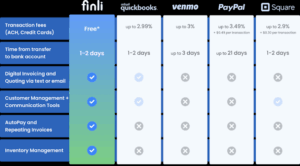
Finli provides financial institutions with a white-labeled platform that addresses exactly these Q4 cash flow challenges. Businesses can send professional invoices with integrated payment options, including 0% ACH processing that keeps transaction costs from eroding margins. Automated reminder sequences handle follow-up without manual effort, while AutoPay functionality converts one-time customers into predictable recurring revenue streams.
Critically, all payments flow directly into accounts at your institution rather than getting trapped in external processor accounts. This protects deposit relationships while providing clients with capabilities that match or exceed standalone fintech solutions.
The platform integrates with existing banking systems through prebuilt connections with Q2 and Jack Henry, enabling deployment without extensive IT resources. Finli’s “Try Before You Integrate” approach lets institutions launch branded business services quickly to capture this Q4 window.
The Broader Relationship Opportunity
Helping clients strengthen their Q4 cash position creates benefits that extend well beyond December. Business owners remember which institutions provided practical support when it mattered most. That memory influences decisions about where to consolidate banking relationships, who to approach for growth financing, and who to recommend when other business owners ask for referrals.
87% of customers are more likely to purchase additional products from companies they trust. Trust builds through demonstrated understanding and practical support, not sales pitches. When you help solve real operational concerns—like collecting the money clients have already earned—you earn the right to expand relationships naturally.
The data advantages compound this relationship benefit. When clients process payments through your platform, you gain real-time visibility into their business performance that traditional banking data can’t provide. You see collection patterns, customer payment behaviors, and cash flow trends that enable truly consultative conversations about credit needs and growth opportunities.
(Source: Edelman Trust Barometer 2023)
Takeaways
Q4 cash positions shape how small businesses enter the new year—either with momentum and resources to pursue opportunities, or with tighter margins that require more careful planning. Financial institutions that help clients accelerate collection and strengthen cash positions during these critical weeks demonstrate partnership that goes beyond transactional banking.
The tools that make the difference aren’t complicated: integrated payment options that make paying effortless, automated reminders that ensure consistent follow-up, and AutoPay functionality that converts unpredictable collection into reliable recurring revenue. These capabilities exist today through platforms like Finli that financial institutions can deploy under their own brand.
The window for Q4 impact is narrowing, but meaningful improvement remains possible. Clients who implement better collection practices even in the final weeks of December can accelerate receivables, strengthen their cash position, and enter January in meaningfully better financial condition. The institutions that enable this transformation become the partners those businesses rely on throughout the year ahead.